


 iscover
‘Dark day for small business’: ‘Toxic’ trust tax law passes Senate after government clinches Greens’ support
BusinessA business group has condemned the passage of the controversial minimum 30 per cent tax on discretionary trusts bill through both houses after the Greens announced it is supporting Labor in exchange for higher fuel excise on private jet owners.
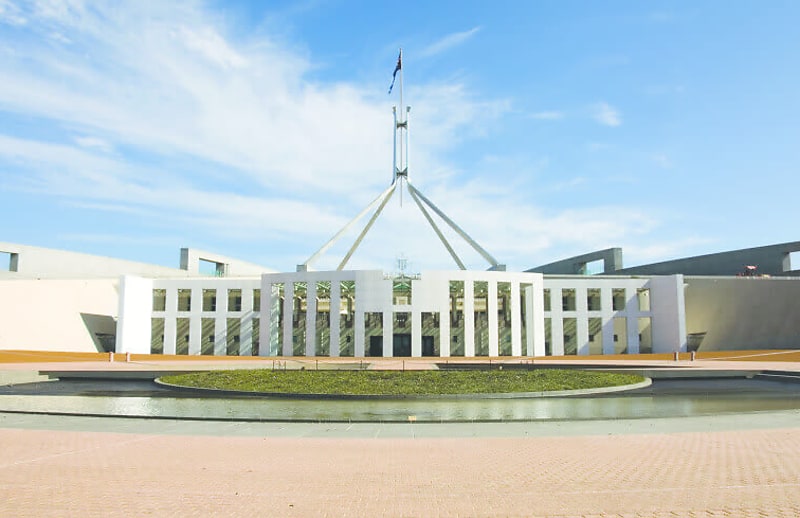
After months of debate, discussions, vocal opposition, a Senate inquiry and subsequent report, the Labor government’s controversial 30 per cent minimum tax bill on discretionary trusts (set to begin on 1 July 2028) has cleared both houses and passed the Senate to become law.
The Treasury Laws Amendment (Tax Reform No. 3) Bill 2026 and Income Tax Rates Amendment (Minimum Tax on Discretionary Trusts) Bill 2026 passed the Senate after the Albanese government and the Greens struck a deal to facilitate the passage of the reforms.
The Coalition attempted a motion to split the bill to separate the trust measures (schedules 1 to 3) from the other measures to either allow more deliberation of the trust tax reforms and scrap the minimum tax or delay implementation by a year to 1 July 2029, but it was defeated.
The Council of Small Business Organisations (COSBOA) expressed deep disappointment over the development, with CEO Skye Cappuccio stating that the decision showed how far small business had been left behind.
“Today is a dark day for small businesses. Small business owners running legitimate businesses through discretionary trusts are people too,” Cappuccio said.
“Many are paying themselves less than the average annual income. They now need to save to fund a costly restructure or find the money to pay a higher tax bill. The impact isn’t just on the business; in many cases it will also directly affect family finances. We’ve already heard from some who don’t think staying in business is worth it.”
Cappuccio added that restructuring could cost $15,000 to $50,000 for a small business before stamp duty, while the alternative election pathway could mean a full year of income taxed at 47 per cent if a family’s circumstances change.
"Small businesses are faced with three bad options: a higher tax bill, a costly restructure or an election pathway that carries its own heavy penalties,” she told Accountants Daily.
“There is still uncertainty around stamp duty implications for those who choose the election pathway. Most states haven’t guaranteed duty-free treatment. For those who see restructuring as their least-worst option, there will be stamp duty implications, just as there would be for a restructure in any other circumstances.”
Liberals vow to axe the tax
The Greens said the government has agreed to close the loophole allowing billionaire private jet owners to pay less tax on fuel than motorists to secure support for its trust tax reform bills.
The opposition labelled the agreement between Labor and the Greens a “dirty deal” to “force another toxic tax through the Parliament”.
The Liberals and Nationals vowed to axe the trust tax and reverse the government’s changes to capital gains tax and negative gearing in addition to cancelling Labor and the ATO’s “botched” credit card ban.
In a Facebook post, Liberal leader Angus Taylor called the trust tax an “assault on aspirational Australians”.
“It’s a smash and grab on tradies, truckies, farmers, pharmacists, and thousands of other small businesses across the country,” he said.
“Small businesses are already getting smashed by higher taxes, higher inflation, higher interest rates, and higher power bills under Labor. This is only going to make it harder for them to invest, grow, and hire Australians.”
What the deal entails
According to Treasurer Jim Chalmers, the excise rate on fuel used in private jets is less than 7 per cent of the rate paid for fuel used in private motor vehicles.
“With the intent of effectively removing this gap, the government will apply increased annual registration fees for private jets, with consultation to occur on design details,” Chalmers said.
Consultation will occur in 2027 to ensure appropriate scope, size, and application of the fee and prevent any unintended consequences, he added.
“Our intent is for the additional fee to apply only to jet aircraft used for private travel or personal own‑business travel,” Chalmers said.
“It is not intended to include aircraft used for a wide range of purposes, such as emergency, medical, government charters, and most business operations – including agriculture – with the specific details to be finalised following consultation.”
Concerns on impacts of business lobbying allayed, says Greens
The Greens said that its negotiations on the Treasury Laws Amendment (Tax Reform No. 3) Bill 2026 have also resulted in additional funding for the charities watchdog to limit the prospects of trusts being used to gain tax advantage for unauthorised non-deductible gift recipient (DGR) charities by deregistering organisations that are contravening their charitable purposes and obligations.
They said that while it gave “in-principle” support for the discretionary trusts tax policy announced by the government in the federal budget in May this year, it raised concerns that the policy would be weakened in response to business lobbying, but said many of these concerns have now been addressed.
It said the negotiations were “always focused on making Australia fairer, and that’s what’s been achieved here”.
Greens treasury spokesperson Senator Nick McKim said “We need to shift the tax burden away from people who work for a living and onto those who have accumulated vast amounts of wealth. Part of that is dismantling the labyrinth of tax avoidance schemes that some of Australia’s richest people have exploited for decades to avoid paying their fair share of tax.
“For too long, discretionary trusts have allowed some of Australia’s wealthiest people to obscure the real ownership of assets and minimise their tax liability. Greater transparency about who really owns what in this country is a major step toward a fairer tax system.”
Australian Greens leader David Shoebridge said: “The Greens have forced the government to end tax advantages for private jets used by the ultra-wealthy.
“If someone’s rich enough to own a plane, they should not be paying less tax than people filling up their car. Gina Rinehart, Clive Palmer and Pauline Hanson shouldn’t get a public subsidy to fly around the country in their private jets.”
More tranches to come
Treasurer Jim Chalmers said the government has agreed to provide additional funding for the ATO and the Australian Charities and Not-for-profits Commission (ACNC) for additional oversight and enforcement, with details to be finalised in the 2027–28 budget process.
Furthermore, it has agreed to provide additional integrity rules to ensure timely reporting of distributions to exempt entities and ensure exemptions are denied for distributions where a benefit is received in return, which Chalmers said draws on existing gifting integrity rules. This would include distributions to a private school to cover a beneficiary’s school fees.
Alongside this, the government amendment to the legislation will mean people with existing wills will not be required to redraft them solely to qualify for the exemption from the minimum tax by adjusting the income exemption for genuine testamentary trusts, Chalmers said.
He added that the government will continue to develop further tranches of legislation to implement its tax package for introduction in 2027.
“This is consistent with the process for legislating other large tax reform packages in the past,” Chalmers said.
“Our discretionary trusts reforms make the tax system fairer, better align the tax treatment of income from assets and income from wages and salaries, and help fund tax cuts for workers. More than 95 per cent of individual tax‑filers don’t receive trust income and more than 90 per cent of small businesses will not be affected by these changes. While there are legitimate reasons to use a trust, they also allow a small proportion of taxpayers to plan their tax affairs in ways that aren’t available to most Australians.”
Chalmers reiterates three options for businesses
Chalmers said those who still want to use a trust for legitimate reasons can do so, and pointed out that the government is providing expanded rollover relief for those who wish to restructure into a fixed trust or company.
The bills offer three options for businesses that use trusts: stay in the same structure and pay the 30 per cent minimum tax, which applies from the first dollar; elect into a fixed distribution regime; or restructure to a corporate entity or fixed trust.
Business groups have argued that all three options would hurt small businesses and their ability to operate and provide jobs.
At a recent Senate hearing on discretionary trusts, CPA Australia tax policy lead Jenny Wong said families and businesses may need to spend between $221 million and $595 million every year to comply with the government’s tax reforms. This is on top of its estimates that they would need to spend between $2 billion and $2.8 billion just to obtain professional advice on what decisions they should make.
CPA Australia, the Institute of Public Accountants (IPA), and the Chartered Accountants Australia and New Zealand (CA ANZ) all supported a one-year delay in the implementation of the government’s tax reforms given their magnitude and uncertainty.
In its report following the hearing, the Senate Economics Legislation Committee was split in its support of the discretionary trust tax bill, with Labor and Green senators recommending that the bill become law.
But Coalition senators vehemently opposed the passage of the bill until the amendment to the income tax law to establish the minimum 30 per cent tax that would apply to the net income of discretionary trusts from 1 July 2028 (schedule 1) is removed.
 Want to see more stories from trusted news sources?
Make Accountants Daily a preferred news source on Google.
