


 iscover
Advocacy group calls for ‘independent’ cost analysis of trust tax reform
BusinessThe group said it would like to see independent analysis of the costs of the proposed reforms rather than it coming from tax advisers “who appear to have a vested interest in opposing this”.
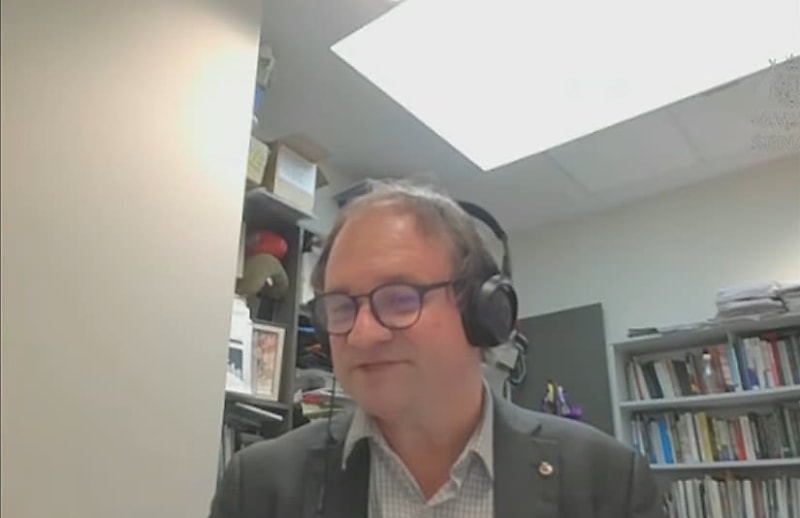
Independent international advocacy group Tax Justice Network Australia spokesperson Dr Mark Zirnsak recently appeared before the Senate Economics Legislation Committee for the public hearing on the government’s proposed discretionary trust tax reforms, where he provided testimony that differed vastly from the accounting bodies who also appeared before the committee.
Noting that representatives from the tax profession who deal with businesses and their issues relating to discretionary trusts have stressed repeatedly that the costs of the proposed changes could be significant, Liberal Senator Kerrynne Liddle asked Zirnsak if there is not a downside to the complexity of the proposed changes and the impact on people who are already struggling if there are significant numbers of small businesses that operate under a trust structure.
Zirnsak responded that, as per his understanding, two-thirds of those who benefit from the discretionary trusts are high-income earners, while a minority are in lower income brackets.
He said the Tax Justice Network “strongly welcomes” the intention to apply a 30 per cent minimum tax to discretionary trusts, adding that they “clearly benefit the wealthiest within the community” and give access to tax advantages that are not available to ordinary wage earners.
“An ordinary wage earner can’t go to their employer and say, ‘I’d like you not to deduct tax from my income, and I want to put it into a trust,’ to gain the advantages that discretionary trusts give to others,” Zirnsak said.
He argued that there has historically been a “fairness issue” around those who have legally gained benefit from these trust arrangements.
“To complain that, because the rules are going to be made fairer, we’re going to bear a cost of having to swap over to fairer rules – I would like to see some independent analysis of the cost rather than it coming from the tax advisers who appear to have a vested interest in opposing this,” Zirnsak said.
“Many of the tax advisory bodies have been very upfront right from when the government announced it in opposing this. It would be good to see some independent analysis about what the real costs are in this space.”
While Treasury estimates that it could cost around $48 million to comply with the proposed trust tax changes, CPA Australia’s figures differ considerably, as it estimates that it could cost businesses between $221 million and $595 million a year to comply with the new tax reforms.
Together with Payday Super and other regulatory changes, Wong said ongoing compliance costs could climb to over $1.1 billion a year. This is on top of the costs to obtain professional advice, which she said would cost between $2 billion and $2.8 billion.
Moreover, CPA Australia tax policy lead Jenny Wong said there is also a gap between Treasury’s estimates of the price of an hour of advice of around $91 because families generally pay commercial professional rates.
Liddle said Treasury’s rate seems like a “far stretch” even for her, who does not work in this field, for someone who is trying to pay all the costs of running a business, employing people, and creating jobs.
“There are two completely different stories there about what that would cost for people to do it, even the cost of people seeing whether there will be a cost or whether they even have to change,” she said.
Zirnsak argued that not all small businesses use trust structures, and the proposed legislation only changes tax arrangements in the trust structures, which are complex structures.
“To my understanding, and from conversations with other experts in the field, it doesn’t change arrangements around other things that trusts might achieve,” he said.
“It is a measure that is changing tax arrangements. Therefore, you can argue that there is an unfair advantage, potentially, for a small business that doesn’t use a trust structure compared with one that does have that benefit. So, there is already a question of a level playing field.”
Furthermore, based on evidence from the Australian Council of Social Service, he noted that these kinds of trust structures and their tax benefits that they offer do not apply in many other (particularly English-speaking) jurisdictions.
“If you want to benefit small business, I would probably make the case that you could do that in much simpler ways to prop up small business, if that was a desire of the parliament to do so, rather than a system that benefits some – and others, depending on how much they’re willing to spend on tax advisers and setting up complex trust structures,” Zirnsak said.
 Want to see more stories from trusted news sources?
Make Accountants Daily a preferred news source on Google.
