


 iscover
ATO’s ‘robo-tax ain’t going to go away’
BusinessThe ATO has been slammed for its “aggressive” debt collection activity and its recently paused super guarantee nudge letters, with one business owner warning that small businesses and suppliers will bear the brunt.
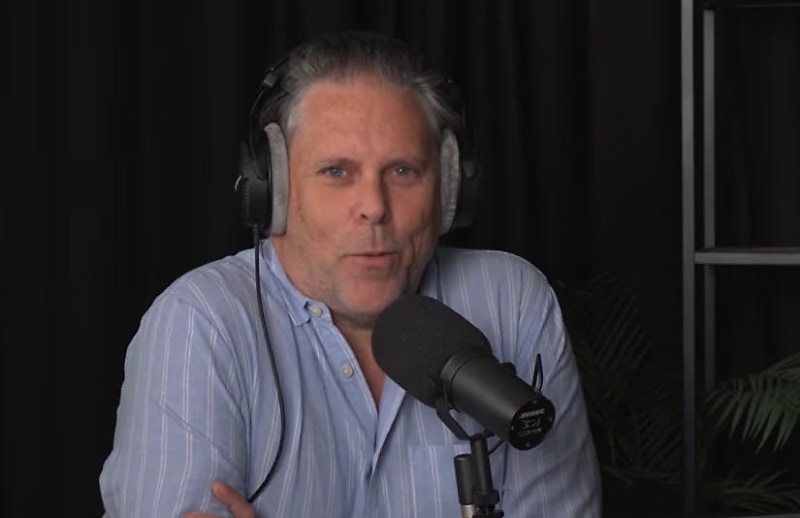
In an episode of the Property Buzz podcast (produced by Accountants Daily’s parent company Momentum Media), on the government’s assault on small business owners, Momentum Media director Phil Tarrant lashed out at the government and the ATO for its aggressive approach to debt and tax collection, or what he termed “robo-tax”.
“Robo-tax is being as aggressive as it ever could possibly be in the history of my relationships with the ATO,” Tarrant said in the podcast.
“You’ve got to pay tax. It’s a privilege to run a business and hire Australians and provide for Australians. But let’s just talk about how this cascades down. With the government and their robo-tax being so aggressive, everyone will do whatever they can to pay the Tax Office first because it’s the Tax Office. It’s horrible.”
This has and will continue to result in unintended and detrimental consequences for small businesses and their suppliers because there is an order of payment of funds that is quietly eroding the business economy, Tarrant warned.
“One of the biggest unintended consequences of all of this stuff that’s going on right now is at the business level. No one’s really talking about this because it’s very uncomfortable,” he said.
While figures from the Australian Bureau of Statistics (ABS) revealed that the unemployment rate increased to 4.9 per cent in October 2026, Tarrant flagged that this could accelerate because businesses “can’t pay their bills” to other businesses, particularly suppliers.
“Maybe people in Labor should be listening to this because I can speak simply so they can understand it. The reason why people can’t pay their bills in business is because businesses are the lowest priority of getting paid by other businesses at this moment,” he said.
Tarrant elaborated that the first party to receive payment is the ATO and the government, which receives tax from the business. The second party is superannuation, where under Payday Super (effective from 1 July 2026), employers must ensure superannuation guarantee contributions are paid to an employee’s super fund within seven business days after the day qualifying earners are paid, with enough information to allocate the contributions to the employees’ member accounts.
“You don’t do it over three months anymore where you could previously use it to balance your cash flow,” Tarrant said.
“Otherwise, the ATO will be at you again, sending you letters, yelling and screaming at you, saying ‘meet your primary requirements’ of the money that you need to provide for the worker to ensure that the government doesn’t have to pay a pension in the future.”
Banks are the third party to be paid, as small business owners pay their business loans and interest, followed by employees.
Suppliers are last in the queue of parties to be paid, by which time the business could be facing a cash flow crunch and may be late to pay their invoices.
“There’s this soft underbelly of the fractured supplier relationship in Australia, and it’s about to come so unravelled when businesses say they can’t pay the supplier because they had to pay all these other people first,” Tarrant said.
“This is what is going to spiral in the economy over the next year: suppliers not getting paid. Everyone’s also got to get paid. Businesses paying other businesses… it’s a massive issue.”
CreditorWatch’s October Business Risk Index revealed that nationally, only 46 per cent of all invoices are now paid on time over the past three months, down from 60 per cent a year ago, while one in 10 invoices is now more than 60 days late. On a 12-month average basis, 7 per cent of invoices are more than 60 days overdue, up from 4.8 per cent a year earlier.
Tarrant added that suppliers have no leverage to collect debts from other businesses besides statutory demands that yield no results, which could leave them with protracted and clogged court claims.
This could leave businesses with no choice but to downsize by cutting staff numbers because payroll is the fastest thing a squeezed business can cut, even as Fair Work claims rise, he said.
“Unfortunately, they reckon there’s a tsunami of redundancy just around the corner,” Tarrant said.
He urged the government to be open and transparent with Australians about the state of the economy.
“Australians should expect honesty from their government,” he said.
“Come out and show some leadership. All they do is talk about getting smashed and cost of living and all this sort of stuff. Come and tell us it’s not good. Acknowledge why it isn’t good.”
To listen to the full Property Buzz podcast, click here.
 Want to see more stories from trusted news sources?
Make Accountants Daily a preferred news source on Google.
