


 iscover
ATO claps back at ‘Robodebt’ allegations as it reports $2.2bn in collected SGC liabilities
TaxFollowing reports claiming that the ATO is carrying out another Robodebt disaster with its superannuation guarantee charge liability letters, Treasurer Jim Chalmers has confirmed a pause on the "nudge" letters, with the Tax Office revealing that it has collected billions in liabilities.
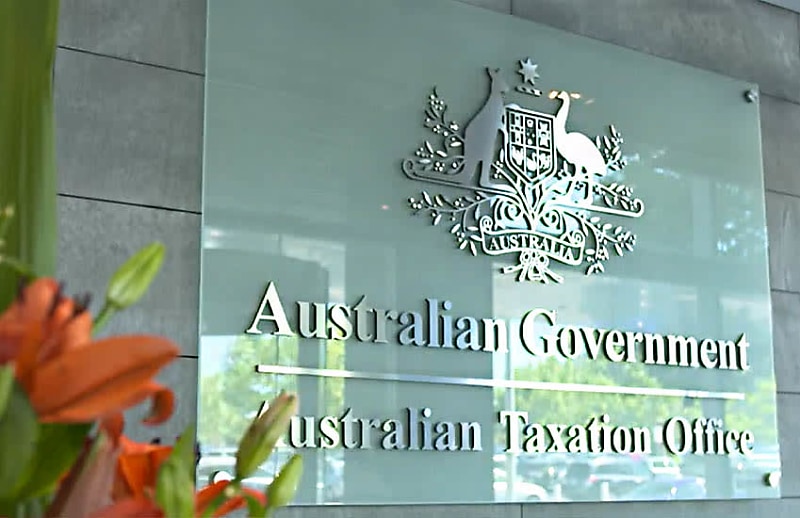
Treasurer Jim Chalmers confirmed in a speech yesterday (17 November) that the ATO has paused its issuance of superannuation guarantee charge (SGC) liability "nudge" letters, following the ATO’s super guarantee annual employer compliance results release on 12 November, revealing that over $7 billion out of $120 billion each year of superannuation entitlements was left unpaid, with one accountant stressing that the numbers don’t paint the full picture.
"The ATO has now paused those letters as they improve those processes," Chalmers said.
The ATO's results noted that in 2025–26, employers who received the SGC liability letters disclosed $467 million in unpaid super for their employees without further intervention from the ATO.
The ATO was questioned in Federal Parliament over alleged data matching failures in these letters in late October.
The ATO said in a statement that the discrepancies in these letters are consistent with the purpose of the letters.
“Differences between information identified in a letter and any subsequently established liability are consistent with the purpose of the letter: to alert an employer to a potential discrepancy so they can check and, where necessary, correct it,” the ATO added.
Despite the allegations of incorrect data, with some making comparisons with the Robodebt scandal, the ATO has spoken out.
“[The allegations] unfairly challenges the importance of ensuring that all employees, particularly the most vulnerable members of our community, are paid their superannuation entitlements,” the ATO said in a statement.
“While we recognise the pressure small businesses can face, the ATO must appropriately balance the interests of employers and employees – for employees, this is to ensure they receive their superannuation entitlements in a timely way to support their retirement savings.”
The results, the reaction
Further, in its 2025–26 super guarantee annual employer compliance results, excluding payday super, “out of the 945,600 employers employing 15 million workers eligible for super, $2.22 billion for approximately 1.02 million unique employees was raised in SGC liabilities including $184 million in interest”.
Further, the ATO found that “a total of $1.13 billion in SGC entitlements was distributed into the funds of approximately 909,000 employees. This amount includes SGC amounts collected in the 2025–26 financial year for the current and prior years”.
“We interacted with 254,910 employers through reminders and prompts as well as targeted audit and review cases, raising $1.17 billion in SGC liabilities,” the ATO website said.
Speaking with Accountants Daily, Saby Group & Co managing director and former ATO tax director Nitin Saby told the brand that businesses receiving these letters are not necessarily businesses refusing to pay super.
Saby, who also goes by “The Tax Surgeon”, added that some employers simply made genuine mistakes, experienced payment delays or have reporting discrepancies.
“The ATO must distinguish between deliberate non-compliance, genuine late payments and inaccurate data matching,” Saby said.
Saby noted that under the pre-July 2026 rules, a payment made one or more days late can trigger a 10 per cent annual nominal interest charge and other statutory consequences.
He had concerns regarding the proportionality and procedural fairness of this process when the data is wrong.
“A small business should not have to spend thousands of dollars proving that a potential six-figure liability is largely incorrect,” he said.
Saby noted that these letters create stress, expense, and uncertainty for employers.
“Employees deserve every dollar of superannuation they have earned. Employers must meet their legal obligations.”
“But the ATO must distinguish between deliberate non-compliance, genuine late payments and inaccurate data matching.”
He noted that although the ATO is reviewing its approach to the letters, the underlying problem needs more scrutiny.
“We need accurate data, transparent calculations and fair treatment of employers who act in good faith.”
“Compliance should protect employees, not unnecessarily punish businesses trying to do the right thing.”
Saby emphasised that these letters must not be ignored, nor should the figures within them be assumed to be correct.
 Want to see more stories from trusted news sources?
Make Accountants Daily a preferred news source on Google.
