


 iscover
Trust tax to earn government $720m from SMBs, Treasury confirms war on trust count growth
BusinessThe Treasury has revealed its stance on the discretionary trust being used by small businesses, arguing that applying the minimum tax will promote equity and level the playing field, and will earn it nearly $1 million in tax revenue.
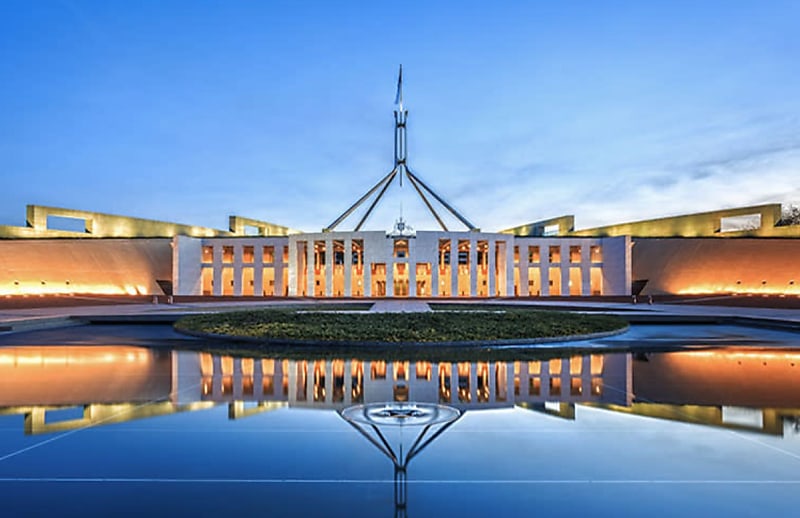
The Treasury faced the Senate Economics Legislation Committee at a hearing on Friday (6 November) on the minimum tax on discretionary trusts, as it stood by the government’s trust tax and its role in levelling the playing field, confirming its position on the discretionary trust structure for small businesses.
Fronting the committee, Emma Gabrielsen, Treasury assistant secretary of its tax analysis division, revealed that out of the $4.5 billion in estimated revenue that is expected to come from trusts, 40 per cent of this revenue is expected to come from businesses, and out of the businesses, a further 40 per cent is expected to come from businesses running out of a trust with a net revenue of less than one million dollars a year.
This 40 per cent of the 40 per cent brings the number to $720 million. At the hearing, Senator Jane Hume said that the earnings from this sector of trusts do not seem worth the hassle that it brings.
“$720 million worth of revenue from this particular group doesn’t sound like an enormous amount for the amount of anxiety and stress that you are causing, and the amount of costs to these businesses to have to restructure their business, get advice, legal advice, accounting advice, business advice, and everything else,” Hume said.
Cracking down on the discretionary trust business structure
Responding to the committee’s questions, Laura Berger-Thomson, Treasury first assistant secretary of the individuals and indirect tax and superannuation division, cited the budget documents which noted significant growth in the number of small businesses running out of discretionary trust structures, relative to company structures.
Thomson admitted that the government’s rationale stood in opposition to the proliferation of small businesses running out of discretionary trusts.
“Part of the rationale for this reform is to prevent even further growth in these types of structures in our economy, and to allow businesses to set up – and in some cases restructure – under structures that are better suited to their business needs [and] not set up because of the way that the tax system is designed,” Thomson said.
“The taxation of trusts and the opportunities that they can provide to lower rates of tax is a significant issue that needs to be addressed,” Thomson told the committee.
She noted that in 2015, the Productivity Commission said that small businesses did not understand discretionary structures well.
“It left them with high ongoing advice costs, and significant risks because of their lack of understanding of these structures,” Thomson said.
Improving equity
Despite conceding the reform’s policy rationale of preventing the further growth of small businesses using discretionary trust structures, Thomson stressed that another piece of the rationale pie was to level the playing field by ensuring that individuals and trustees with trusts pay the minimum tax.
“The real purpose of this…Is really to improve equity between income earned through discretionary trusts and income earned through wages or direct business activity, and to do that, to reduce the extent to which tax advantages can be attained through those structures,” Thomson said.
“It is appropriate that those individuals or those trustees are splitting and streaming their income to reduce the tax paid on this income, [have] a minimum rate of tax paid on that income, where that opportunity is not available to other families and other individuals in the economy and in society.”
“We know that the top-earning 10 per cent of individuals have 90 per cent of total trust wealth. There is a large share of what we’re talking about here, which is in high-income individuals and families.”
During the hearing, Thomson noted that Treasury estimated the average cost of restructuring would be $11,000 or 100 hours of advice time.
“I accept that we are in the low range, but we are still within the range of what is being provided,” Thomson told the committee.
“There could be differences in the costs of that advice, perhaps not in terms of the hours.”
During the same hearing, Australian Council of Social Service (ACOSS) and Saul Eslake supported the minimum tax, arguing that it levels the playing field and targets high-income earners.
On the first day of the hearings the day prior (5 November), Council of Small Business Organisations Australia (COSBOA) told the committee that this is a “bad tax bill”.
“I would repeat the fact that we do not think that this is appropriate or justified tax legislation at all. But if it does go ahead, we really do need to carve out small businesses, at least grandfather those who are established in discretionary trusts, and who are turning over $10 million or less, because we literally do not think that many of them can cope with the costs and the pressures of the changes that moving into this will require them to cope with,” COSBOA chief executive Skye Cappuccio told the committee.
 Want to see more stories from trusted news sources?
Make Accountants Daily a preferred news source on Google.
