


 iscover
‘This is a bad tax bill’: COSBOA presses for trust tax bill to be scrapped
BusinessThe peak body for small businesses has strongly suggested that the discretionary trust tax bill does not proceed and said it does not think the legislation is justified.
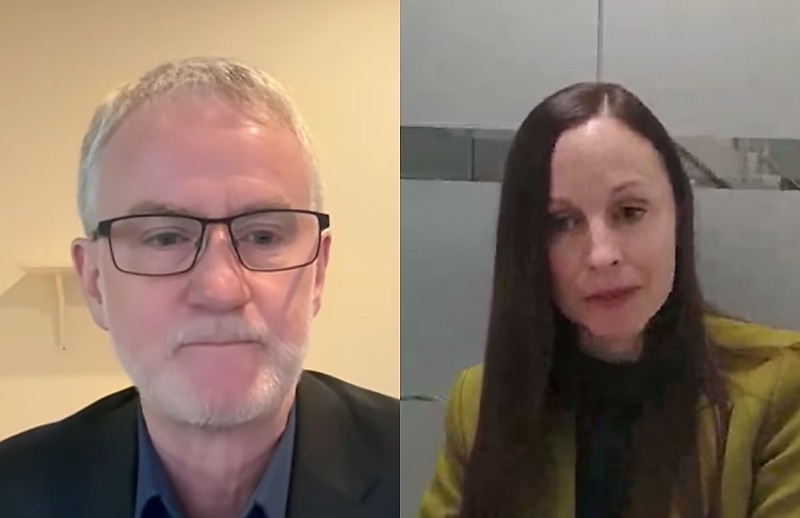
Appearing before the Senate Economics Legislation Committee to discuss the proposed minimum 30 per cent tax on discretionary trusts the Council of Small Business Organisations Australia (COSBOA) CEO Skye Cappuccio declared that the bill should not proceed, and any concern about tax integrity should be targeted at the conduct of concern, “not targeted with this blunt instrument that makes collateral damage of small businesses”.
“COSBOA acknowledges the government’s aim of protecting the integrity of the tax system but this measure targets a legal structure, not any specific conduct of concern,” Cappuccio told the committee.
She continued that small businesses operating through a trust often have family members working in the business and drawing no separate wage.
“Small businesses use trusts for asset protection, succession planning, and continuity, and these arrangements have been lawful for decades,” Cappuccio said.
“The vast majority are what the ATO terms micro businesses, that is, they turn over less than $2 million annually. They are not high wealth individuals or high wealth business owners.”
If the proposals are passed through Parliament and become legislation, Cappuccio called for the committee to recommend that genuine small businesses with a turnover under $10 million be grandfathered.
“We ask the committee to pause and consider what is gained by amplifying pressure on hundreds of thousands of small business owners, many who already have their backs against the wall,” she said.
Grandfather small business, COSBOA says
Liberal Senator Jame Hume asked Cappuccio if COSBOA would support a one-year delay in implementation of the Treasury Laws Amendment (Tax Reform No. 3) Bill 2026 and Income Tax Rates Amendment (Minimum Tax on Discretionary Trusts) Bill 2026.
While acknowledging that a delay would provide small businesses and their advisers more time to prepare and gain clarity on those instruments that have not been clarified, Cappuccio argued that this would just be “pushing the can down the road of bad tax”.
“This is a bad tax bill, whether it comes in on 1 July 2028 or 1 July 2029,” she said.
“I would repeat the fact that we do not think that this is appropriate or justified tax legislation at all. But if it does go ahead, we really do need to carve out small businesses, at least grandfather those who are established in discretionary trusts, and who are turning over $10 million or less, because we literally do not think that many of them can cope with the costs and the pressures of the changes that moving into this will require them to cope with.”
In her opening statement, Cappuccio highlighted that the 30 per cent minimum tax on discretionary trust income is “disproportionately harmful” on those trusts that are distributing the least.
She said a husband and wife with $200,000 evenly distributed between them as their sole income could pay an $18,000 a year in tax, adding that they would have to pay more than if they had been making $220,000 a year as employees.
Drawing on Treasury’s figures that showed that around 350,000 active small businesses operated through a discretionary trust structure in 2022–23, Cappuccio said even if only 100,000 opt to restructure their trust, national advisory costs could balloon to between $1.5 billion and $5.0 billion.
“Further, the paperwork load expected for each and every one of these businesses when they restructure is substantial: new contracts, new licenses, new insurance, new finance agreements, when the priority should be on cutting red tape and driving productivity, not on adding to it,” she said during the hearing.
Stamp duty certainty essential
Cappuccio expressed “real concern” in the business community about whether or not small businesses would be able to afford the additional costs they may have to bear as a result of the proposed trust tax legislation.
“It either increases in many cases the tax that they’ll be paying, or it means that they have to save and then invest additional funds into restructuring and put additional time into all of the paperwork that goes alongside restructuring,” she said.
“Most small businesses at the moment have their back against the wall, and the thought that they have those funds available to invest just to restructure because the law changes does seem to many of them ludicrous.”
Executive director of the Institute of Chartered Accountants and immediate past chair of COSBOA Matthew Addison stressed to the committee that the industry requires certainty around the stamp duty impact of the excluded election trust (EET) election and the federal government must have discussions to ensure that the stamp duty does not apply to those who make the election or revoke the election in the future if necessary.
“Otherwise, you’ve got a pending stamp duty penalty as well as the 47 per cent,” he said.
“That punishment on exit, we don’t believe was part of the budget announcement. We believe that has been brought in subsequent, and we really struggle with that.”
Furthermore, Addison argued that the minimum tax imposed on small businesses could mean it hinders their ability to use their after-profit tax to reinvest capital back into their business.
“We are taking development funds away from them and putting it into the tax. It’s become a revenue solution for the government rather than the integrity solution that it was first tabled as,” Addison said.
 Want to see more stories from trusted news sources?
Make Accountants Daily a preferred news source on Google.
