


 iscover
 Commissioner of Taxation on ATO’s digital future
TechnologyWorking hard to make a digital ATO landscape a reality, the Commissioner of Taxation has spoken about the future of its services after a few hiccups over the past two years.
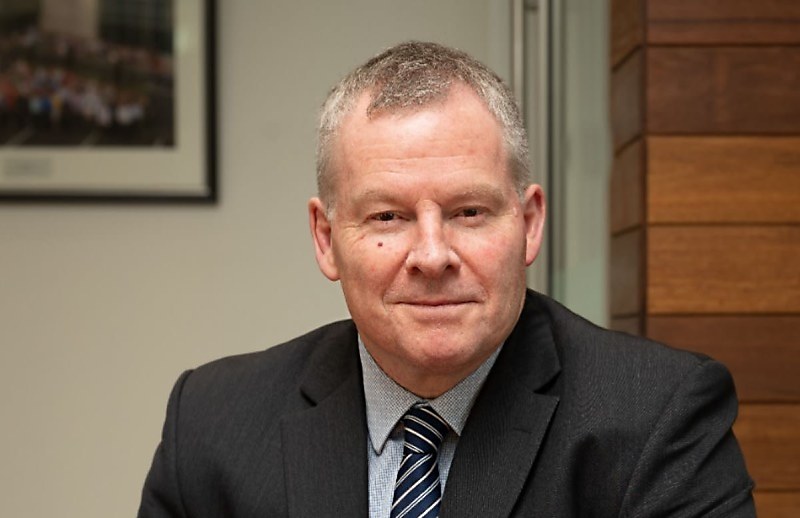
With the ATO phone line facing scrutiny from tax agents and a Tax Ombudsman report airing the communication channel’s shortfalls, Commissioner of Taxation Rob Heferen (pictured) has said that in line with the ATO Strategy 2026-30, the future for contacting the ATO will be digital.
Heferen said in his opening address at the 2026 CPA Australia Tax Forum that the technological shift for tax practitioners began as paper-based and is now transitioning from phone-based to digital.
“Years ago, it was paper-based; then we went to phone-based; we want to move it so it is digital-based. So people can contact us digitally, with confidence that the system works, with confidence that whatever goes in will be in that protective environment.
“We aim for a future where … people won't need to ring. They can contact [a] safe, secure digital system and get a quick, maybe not instantaneous, but a quick response.
“We’re working hard to make sure that becomes a reality over the next few years.”
Heferen presented this keynote after some practitioners had their systems targeted by fraudulent actors this month, when malicious links embedded in inbound communications were clicked by some tax agents.
“Not entirely sure what the wash-up of that is, but certainly would be better having responded quickly than if that message came through late,” Heferen said.
The ATO introduced improvements to its app, including updated linking to myGov in June, a call verification feature in April, and real-time updates and account locking last year.
“We continue to invest in tools like the ATO app and My ID with the goal of balancing simplicity with enhanced security. The app provides taxpayers with improved visibility of their account information and activity and supports early detection of suspicious behaviour,” said Heferen.
“Its features can also act as an early warning system with real-time alerts, prompting a client to contact you if they notice unexpected activity.”
Phone-based to digital-based
One of the five strategic shifts in the ATO Strategy 2026-30 is to strengthen the system so that it works fairly and as intended.
Heferen said in his keynote address that the ability to lodge tax returns online with features such as pre-fill has expedited the process from about eight hours to eight minutes.
“In the mid-90s … it was estimated that individual taxpayers with straightforward affairs spent on average eight and a half hours to complete their tax returns,” Heferen said.
“In contrast, in 2024, nearly 2.4 million taxpayers in similar circumstances took around eight minutes to lodge their tax return using My Tax and the ATO online services [for agents] … largely due to comprehensive withholding and extensive prefilling.”
Heferen said queries that seek an analytical answer, as opposed to judgement, can be answered digitally.
“And so if people want to check on something, that can be done quickly [and] efficiently. That ought to relieve quite a burden.
“That's going to lift a lot of the time wasted with people sitting on phone lines, also uncertainly created where people can't get through.”
Phone-line complaints
In March 2025, the National Tax and Accountants’ Association (NTAA) provided recommendations to improve the ATO-registered phone line following complaints from tax agents, which eventually led to the Tax Ombudsman’s Systemic review of the effectiveness of the ATO’s registered agent phone line, completed in October 2025, finding service gaps in the phone line service.
“We simply don't have enough people to answer all the phone calls that come in. And hopefully no one would really expect us to, because that requires an enormous number of resources to actually spend time entering calls,” Heferen said.
“The problem is that [there is a] high probability you will get answered, but there's a very reasonable probability that the call would be blocked.”
Heferen told the forum that hiring more staff is not a long-term solution for the ATO, and it is looking to implement digital solutions rather than raising headcount.
“It’s not about replacing people, it is about making better use of their expertise and enabling them to focus on the work that matters most.
“AI can help us automate routine activities and process information at scale, identify risks earlier, and deliver greater consistency in how straightforward matters are handled.”
Late last year, Beth Vincent-Pietsch, deputy national president of the Community and Public Sector Union, told the brand that contracted ATO phone operators are not given the same level of training as ATO employees.
“Service delivery workers within the ATO [are] really frustrated by the number of times that this leads to the need for double handling … because people have been given incorrect advice or not been able to get the advice or the work that they need,” Vincent-Pietsch said.
Despite this, Heferen said that inconsistencies were the key culprit for service gaps.
“Because the phone goes through to a phone operator, someone on the other end … there’s still a proportion of calls that come in asking for an answer to a tax question. So, given there's an uncertainty, there'll be an inconsistent approach if different people answer the same kind of issue,” Heferen said.
“By going to a digital solution, the probability of inconsistency is reduced dramatically, and that would be in everyone's interest.”
On Thursday (20 August), Taxation Ombudsman Ruth Owen released its ATO online services for agents, finding a 13 per cent fall in tax agent satisfaction with the ATO’s online services for agents.
Owen said: “I've done my best to prioritise and draw those together into a list that based on your feedback and working with people like Bill [Leung, tax adviser at CPA Australia] Jenny [Wong, tax lead in policy and advocacy CPA Australia], have helped me come up with a top 10 things that I think are practical things that the ATO could change.”
Owen urged tax practitioners to engage with the ATO’s Tax Practitioner Improvements Consultation Working Group as it focuses on consulting on the implementation of the Tax Ombudsman’s registered agent phone line and service and offer report recommendations.
 Want to see more stories from trusted news sources?
Make Accountants Daily a preferred news source on Google.
