


 iscover
 Discretionary trusts bill: Adequate improvements for ‘inadequate’ consultation response?
TaxThe accounting profession has spoken, with practitioners questioning the effectiveness of Treasury’s consultation following the government’s introduction of its minimum tax on discretionary trusts bill last week.
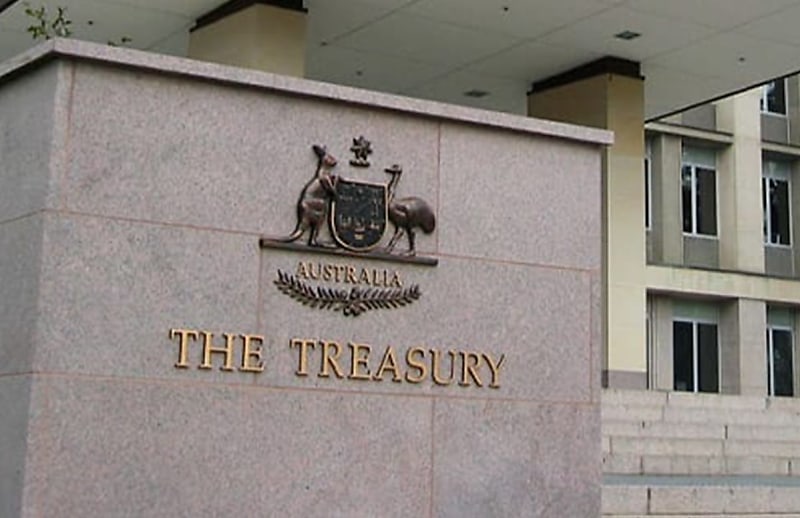
After Treasurer Jim Chalmers introduced the Treasury Laws Amendment (Tax Reform no. 3) Bill 2026 and the Income Tax Rates Amendment (Minimum Tax on Discretionary Trusts) Bill 2026 on Wednesday (14 October), accountants were quick to offer their two cents, with many calling out the Treasury’s consultation.
Despite this, some commenters on Accountants Daily were not too fussed about the bill.
“You do NOT need to receive income from a trust. Your problem is all in your imagination,” one commenter said.
“Sounds like the balance is about right. Just make it law already,” another said.
The new bill introduces a commissioner’s discretion to address inadvertent errors which lead to the revocation of the election to apply the Electable Excluded Trust (EET) regime, and the ability for existing family trusts to elect to fix their beneficiaries’ shares and stay outside the minimum tax without restructuring, and greater clarity around which trusts are not subject to the 30 per cent minimum tax on discretionary trust distributions.
Exempt from the legislation are genuine testamentary trusts, distributions to charities and child maintenance trusts.
“There is still more work to do. Restructuring a family business is often complex and can involve significant legal, financing and other costs such as stamp duty. We recommended additional measures to help businesses manage these costs, but those changes do not appear in the Bill,” Susan Franks, CA ANZ, tax, superannuation and financial services leader, told Accountants Daily.
An ‘inadequate’ response
The new bill continues to propose that trustees pay a 30 per cent minimum tax on the taxable income of discretionary trusts, with corporate beneficiaries not entitled to refundable offsets for the tax payable by the trustee.
While the bill introduces some new changes, practitioners are calling for greater fundamental reform to the legislation.
Tax Invest Accounting director and accountant Belinda Raso said that the government’s response to the consultation has been inadequate given the scale and complexity of these reforms.
Speaking with the brand, Raso said: “More comprehensive consultation and clearer safeguards are needed to avoid unintended consequences for family businesses and other legitimate users of trusts.”
“Incorporating some feedback is not the same as resolving fundamental concerns,” Raso said.
“A 15-day consultation period on the exposure draft, combined with important implementation details still to be finalised, raises serious questions about whether stakeholders had a meaningful opportunity to assess the full impact of the reforms,” Raso said.
Concerns with what the government got out of the consultation continued.
“I’m sure that in a few years time, when we start seeing the impact of the uncertainty and cost, that the PM and Treasurer will be saying it wasn’t their fault & blaming someone else,” wrote Tracey Dunn, Birchstone Legal Group associate director in a LinkedIn post.
“This government is not interested in genuine consultation or listening to expert opinions in submissions, as doing so would mean having to accept their attempts at tax reform are unworkable,” Dunn added.
“Was any of the extensive (negative) feedback on the Minimum Trust Exposure Draft taken into account? The many critical flaws in the ED still remain - as far as I can see in my first reading. Was this (another) sham consultation - for the most significant and complex tax changes in 40 years,” Principal at Cartland Law Adrian Cartland wrote in his LinkedIn post.
“Family businesses are still being asked to make decisions they can’t take back before the rulebook is complete,” CPA Australia tax lead Jenny Wong said.
“We remain concerned that some aspects of the new rules are too rigid and may not adequately cater for changes in family or commercial circumstances,” Franks said.
CPA Australia estimates that restructuring a family business can cost between $9,536 and $23,436.
National Tax & Accountants’ Association Ltd (NTAA) senior advocate Robyn Jacobson told the brand: “The burden of the minimum tax falls unfairly on beneficiaries on modest incomes while high-income earners are unaffected, corporate beneficiaries face double taxation with an illogical justification for denying companies an offset for the tax paid by the trustee, and vulnerable adults lose the protection available to minors once they turn 18.”
Jacobson said that the consultation window made it difficult for NTAA to properly canvas our members on how these measures will affect them and their clients.
“These changes are a positive step, but the real test will be whether family businesses can transition to the new rules without unnecessary costs or compliance burdens,” Franks said.
 Want to see more stories from trusted news sources?
Make Accountants Daily a preferred news source on Google.
