


 iscover
Working in tax is not just bean counting; it’s life-changing
BusinessOne more voice answers the call as the accounting profession faces a looming retirement cliff. Schools are one of the most crucial places for any budding accountant, one academic director said, as she explores how to take the talent shortage head-on.
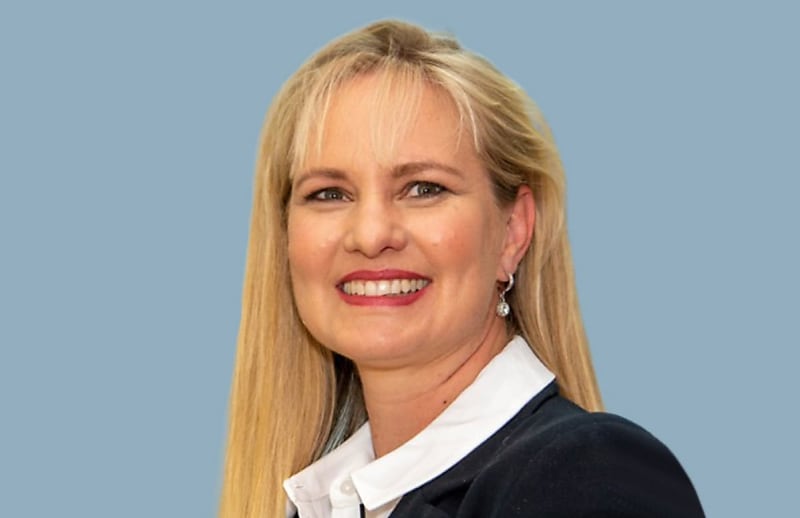
Tax is a diverse profession, and there are many different roles that a qualified accountant can specialise in, such as transfer pricing, international tax, GST, Dr Sharon Smulders (pictured), academic director at The Tax Institute, said on an Under the Hood podcast episode.
“It’s such a diverse [profession] that can really provide somebody with an area that they find exciting and can focus on and become a specialist in,” Smulders said on the podcast.
Smulders said that the diversity in the profession does not end once you pick your speciality.
“It’s also exciting because two days are never the same in accounting, or specifically in a tax environment, because two clients have different scenarios and different outcomes. So it’s an exciting space to be in and lots to do across the whole ecosystem,” she said.
Smulders told the brand the important role that accountants play in small businesses.
“The accountant is the first, the first person that a small business will go to to say, okay, I’ve heard about these changes.”
Smulders noted that most small businesses do not have their own in-house tax specialists or accountants.
“That is the most trusted advisor. And they rely on them not only for their tax compliance, but also for starting up their business, growing and expanding their business both locally and internationally, investment decisions, employing staff, managing their cash flow and navigating change.”
Lots of space for new talent
With this significant role that accountants play for the economy, their clients, and small businesses, Smulders said that the profession’s workforce is currently facing a “perfect storm”.
“Australia is facing a growing shortage of professionals at the same time that tax law, regulation, technology and compliance requirements are becoming more complex. So the demand for tax professionals is growing. But unfortunately, the pipeline of new entrants coming through is shrinking.”
This is exacerbated by many tax agents reaching retirement age, with 32 per cent of tax agents 60 years or older, and 58 per cent are over 50 years old.
This follows Randstad Australia data, which projects 22,000 accountants are set to retire in 2026.
“The profession is facing not a temporary talent shortage; it’s facing a long-term structural workforce challenge, which is quite concerning because the pipeline’s weakening, but the profession is losing professionals – that has an impact on small business and economic issues.”
Originally serving the profession in South Africa, Smulders noted that it is very difficult to move anywhere else when you study a country’s law; however, he said that if you learn the concepts, it becomes a mobile skill.
“Tax advisers are mobile. There is a demand for them across the world. So it’s not just the shortage here; Australia at the moment is bringing in a lot of individuals.”
According to The Tax Institute’s The State of Tax Education in Australia 2026 report, the number of temporary skilled visa holders working as taxation accountants in Australia has grown substantially, up from 100 per quarter in 2015 to approaching 292 by 2025.
Further, DXP Consulting’s report, Demand for and Supply of Taxation Professionals in Australia 2026, found that while there are transitory workers who may return home, their numbers are not large in the context of a profession of nearly 78,000 registered practitioners.
Smulders stressed that if these foreign students stay in the country to become accountants, they fulfil an important role in filling the Australian accounting profession’s talent shortage.
Accountants are born in schools
School is where the buck stops, Smulders said, where access, awareness, and education issues contribute to children’s understanding of the tax profession.
“[Students] get a bit scared that [accountants] have to be good with numbers and about what they do, but AI has also come into that mix and helped that out.”
“Across the board, students [must be] involved at school, teaching them why it’s so important to learn about tax and what tax does, why are you paying tax, how does that benefit you and your family and your community, you know, building roads, hospitals and clinics.”
Smulders noted that although undergraduate accounting students learn the fundamental skills of the profession, some don’t complete the degree, or leave the profession because of a fear of AI, or they find it too difficult.
“I think it’s really important that we bring the practical experiences in there as well… I think it’s really important [to] provide that interaction between university and practice where our programs are provided by actual people in practice.”
Smulders said that it is important to start at schools and spread awareness of the profession,
“Schools play an absolute fundamental role in shaping what tax is and why it is so important, and accounting as well, and how important that is to their lives… I think it’s also breaking that stigma about accounting being boring, because it’s not boring.”
“There are so many avenues that you can go, and I think also from a career perspective, this has changed over the years.”
“Before, the general model was that you did your accounting degree, chartered accountant, CPA, whatever it may be, and then you followed on and specialised in taxation. I think now the role is changing. You can go directly into tax if you like. I still would advise having an accounting background; it definitely does help, but it’s definitely not essential anymore. You can go directly and study tax from the beginning, and I think that’s important to know for a lot of children.”
Attracting, retaining new entrants
While AI is being seen as a threat to entry-level jobs, Smulders said that this gives accountants an opportunity to step off the administrative obligations and gives them additional capacity to move into the advisory space.
“A new accountant starting would generally not be doing the checking of invoices anymore; AI could potentially be doing all of that.”
Smulders said that accounting is a good opportunity for students who are technology-savvy and are problem solvers.
At the same time, she stressed the importance of employers’ roles in retaining and attracting practitioners.
“Especially with the younger generation wanting more job satisfaction and being more mobile, [employers] can switch between jobs quite easily, with the unemployment rate being quite low. Retaining the right individuals is becoming more and more important, so employers will have to provide their employees with a good working environment.”
She said that flexibility and providing funding for micro-credentials and bite-sized learning were some other crucial levers for retaining accounting employees.
For Smulders, attracting the youth to the accounting profession is crucial for the future of tax. For new entrants, she said there are a couple of key qualities they can adopt for success.
“Stay curious, be willing to learn and adapt because the learning will never stop…be willing to try different things and put your hand up for different opportunities – I think that’s really important.”
“It’s always going to take hard work; that’s [always] going to be there, but put your hand up to try different things and go with your passion. I think you’ve got to have a passion for what you’re doing because that will make the difficult times a lot easier. That’s absolutely critical to me: work hard, follow your passion, and try to help where you can.”
 Want to see more stories from trusted news sources?
Make Accountants Daily a preferred news source on Google.
