


 iscover
 Budget 2026 a mixed bag for SMEs
BusinessNumerous measures unveiled for small businesses in this week’s federal budget have been welcomed, whereas others are cause for concern, according to industry bodies and tech providers.
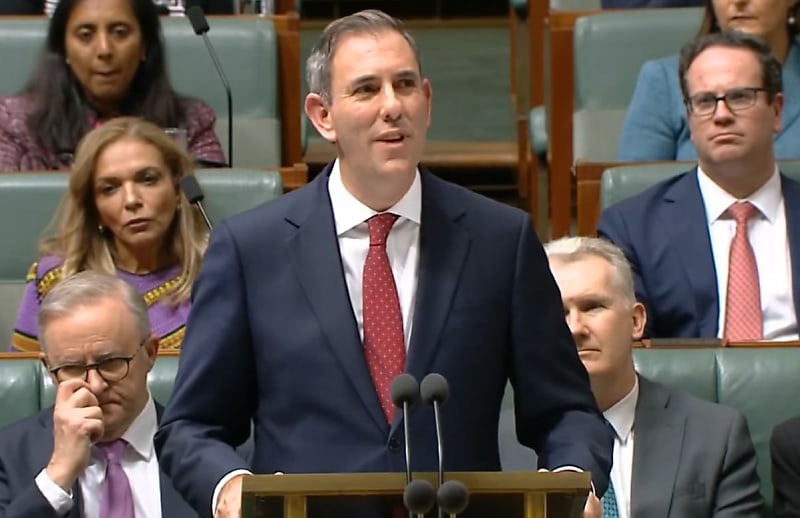
On the evening of Tuesday 12 May, Treasurer Jim Chalmers handed down one of the most significant budgets for tax and accounting professionals in recent years, with this year’s papers containing fundamental changes to the taxation of capital gains and trusts, incentives for small businesses and an overhaul of the R&D tax incentive, among other key tax changes and measures.
Treasurer Chalmers said that the reform packages for both tax and productivity within the budget were “ambitious” and will help “build a better tax system for businesses”.
“This Budget includes the most significant tax reform package in more than a quarter of a century,” he said.
“This is about tax relief and tax reform to make our economy work for more Australians, businesses and future generations.”
Encouraging steps
The Council of Small Business Organisations Australia (COSBOA) said that the budget delivers some encouraging measures to support productivity and reduce regulatory burden, with chief executive Skye Cappuccio saying measures aimed at simplifying compliance, improving harmonisation and supporting investment were welcome at a time when small businesses remain under significant economic pressure.
“Small businesses are looking for certainty, simplicity and practical support to help them manage the cumulative pressures of fuel, energy, insurance, wages, rent, freight and compliance costs,” she said.
“There are some encouraging signs in this Budget that recognise the need to improve the operating environment for small business and reduce friction across the economy.”
COSBOA welcomed, among other changes, the progression of the ‘tell us once’ principle across government agencies and regulators, harmonisation of payroll tax and licensing arrangements across State and Territory borders, the streamlining of secure access to government services through Digital ID, and the reduction of the burden by $10.2 billion annually in compliance costs.
Intuit APAC head of corporate affairs and public policy Simeon Duncan said the budget “delivers for Australia's small businesses”.
“Making the $20,000 instant asset write-off permanent ends years of uncertainty for the 2.6 million businesses driving our economy. The $62 million Consumer Data Right investment, including the ATO data-sharing pilot, picks up a key recommendation from Intuit's pre-budget submission,” he said.
“Small businesses need certainty and simpler ways to use their own data. The Government has moved on both. We'll keep working with Treasury and the ATO on what comes next.”
MYOB chief executive Paul Robson said that the budget responds to some of the challenges facing Australian SMEs.
“Small and medium businesses are managing rising employment costs, new compliance obligations, changing regulatory settings as well as softer economic conditions,” he said.
“It will be increasingly important for SMEs to seek advice from trusted advisors, such as their accountant, as they navigate these changes and make necessary adjustments. Getting the right guidance will help businesses avoid costly mistakes, reduce disruption, and stay focused on performance and growth.”
The latest MYOB Business Monitor highlights that SME confidence remains under pressure, with business conditions and policy settings continuing to shape growth and investment decisions.
Nineteen per cent of SMEs reported revenue growth over the past 12 months, Robson noted, while 67 per cent expect the economy to soften further in the year ahead. One in four SMEs said they would expand operations if meaningful support was delivered in this budget, while 65 per cent indicated they would delay investment or hiring decisions if their priorities were not addressed.
“SMEs are resilient, ambitious and ready to grow, but without confidence in the road ahead, the decisions to invest, hire and expand become more challenging,” he said.
“[The] budget provides some important measures that enable long-term business planning. The focus now must be on ensuring these unlock confidence and investment across a sector that remains central to the Australian economy.”
Rising complexity on the horizon
The National Tax & Accountants’ Association Ltd (NTAA) has welcomed the permanent $20,000 instant asset write-off for small business, saying it finally delivers certainty after years of temporary extensions and last-minute law changes.
NTAA senior advocate Robyn Jacobson said that making the $20,000 IAWO permanent is a sensible, overdue step that provides certainty and supports investment decisions, but warned other measures in the Budget risked increasing complexity in pursuing policy outcomes.
“Some of the proposed measures, albeit well-intentioned, will likely increase the compliance burden for business owners and practitioners when additional rules, reporting and new definitions are layered onto existing frameworks,” she said.
The association welcomed the permanent $20,000 instant asset write-off and reintroduction of the ‘loss carry back’ concession, but expressed concern about the upending of the exclusion from CGT for assets originally acquired before the introduction of CGT, and the replacement of the CGT discount with indexation, which it said “may address some inequity but will add significant complexity to even basic capital gains calculations”.
Cappuccio expressed similar reservations, noting that the CGT changes and the taxation of trusts have the potential to significantly disrupt the retirement plans of many small business owners.
“For many Australians, their business is their retirement asset. Changes that reduce the value of business sale proceeds or associated property holdings could have major long-term consequences for owners who have spent decades building their businesses,” she said.
Moving forward, Cappuccio said that the government must undertake extensive consultation with the small business sector before implementing the proposed reforms.
“Small business needs fairness in the tax system, but it also needs stability, certainty and simplicity,” she said.
“We are urging the government to work closely with stakeholders to prevent unintended consequences and ensure these reforms are workable in practice.”
Moreover, she went on, the government must consider a specific carve-out for small business trusts and provide support to help business owners access appropriate advice and understand the implications of the proposed changes.
“Many small businesses will require professional advice to fully assess the impact of these measures, and government should assist businesses to navigate what are substantial and complex changes,” Cappuccio said.
 Want to see more stories from trusted news sources?
Make Accountants Daily a preferred news source on Google.
