


 iscover
 Bendel ruling explained: unpacking the High Court’s decision
TaxThe High Court of Australia has dismissed the Commissioner of Taxation’s appeal in Commissioner of Taxation v Bendel. In this analysis, Accountants Daily breaks down the judgment and speaks to tax advisers about what it means.
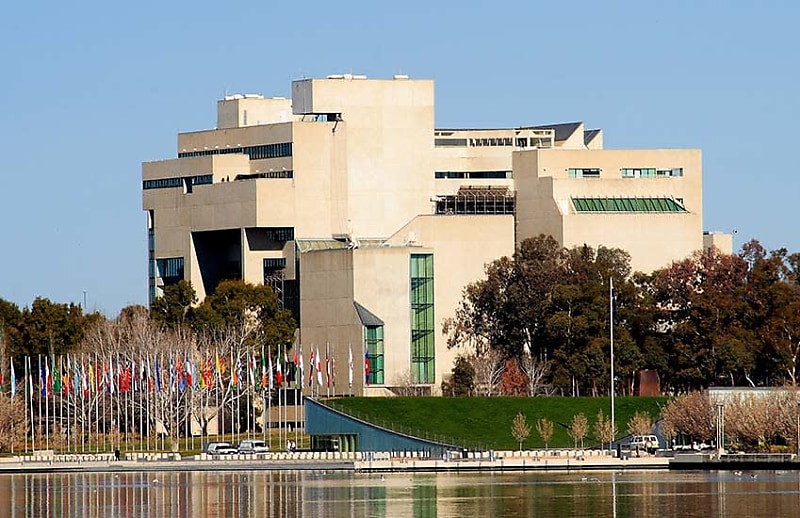
The Tax Office has lost its High Court appeal in Commissioner of Taxation v Bendel, with the majority of the bench ruling against its submissions with respect to unpaid present entitlements (UPEs), the definition of a “loan”, and its take on the relevant legislation.
The ATO said it welcomed the decision.
“We are currently considering the implications of this adverse decision and will update our views set out in our Interim Decision Impact Statement as soon as possible to provide practical guidance to impacted taxpayers,” the ATO said in a statement.
The original appeal decision by the Federal Court held that UPEs arising from an entitlement to a trust's income were not loans under Division 7A of Part III of the Income Tax Assessment Act 1936.
Experts, such as those at the Institute of Public Accountants, shared that the decision directly contradicted the ATO’s TD2022/1 determination and has set a precedent for UPEs owed to corporate beneficiaries.
“The ATO [has] steadfastly always maintained over the past 15 years that UPEs were the provision of financial accommodation and therefore treated them as loans for Div 7A purposes,” the institute’s senior tax adviser, Tony Greco, told Accountants Daily.
Julie Abdalla, head of tax and legal, added: “This ruling brings long-awaited juridical certainty to an area of trust taxation that has been the subject of significant controversy and compliance activity for more than a decade."
“The decision is expected to have broad implications for private groups that use trust and company structures, particularly regarding how retained trust profits are managed and taxed.”
The commissioner’s special leave application raised directly the application of Division 7A, which was enacted to ensure private companies “will no longer be able to make tax-free distributions of profits to shareholders (and their associates) in the form of payments”.
The High Court’s full bench held, by a 5:2 majority, that by not calling for payment of the UPEs set aside for it, Gleewin Investments did not provide “financial accommodation” under section 109D(3)(b), “nor did it in substance effect a ‘loan of money’” to Gleewin.
“In addition, the High Court held that the resolutions to set aside the amounts for Gleewin Investments did not relevantly affect the distribution of those unpaid present entitlements, nor did there arise a relationship of debtor and creditor between Gleewin and Gleewin Investments,” the Full Bench said in its summary.
“Rather, by the resolutions, the unpaid present entitlements were held on separate trust for Gleewin Investments.”
Setting the scene for Commissioner of Taxation v Bendel
The Bendel group comprised entities that conducted an accounting and tax-agent practice, including Steven Bendel, Gleewin Investments, and Gleewin Pty Ltd. The latter was the trustee of the Steven Bendel 2005 Discretionary Trust, and the former was a discretionary object.
The assets of the trust comprised an interest in other entities from within the Bendel group, which was used to invest in commercial property syndicates. The trust received income from these assets.
In each of the years of income ending 30 June 2014 to 30 June 2017, Gleewin Pty Ltd resolved to “set aside”, for the benefit of one or each of its discretionary objects, percentages of the trust’s net income.
Those amounts were to be held on separate trusts. At no point did Gleewin Investments call for payments to be made.
Notices of amended assessment were issued to Gleewin Investments, with the commissioner relying on section 109D of the ITAA. It contended that the amounts set aside by the resolutions, or the UPEs, amounted to a “provision of credit” and a form of financial accommodation.
The commissioner argued the UPEs were, “in substance”, loans of money from Gleewin Investments to Gleewin.
On the High Court appeal, preliminary questions arose as to the proper construction and legal effects of the resolution, including whether it effected a setting aside and then distribution of UPEs; whether separate trusts were created in respect of those amounts; and whether the resolutions gave rise to a debtor/creditor relationship.
Contrary to the commissioner’s submissions, the resolutions effected a setting aside of the UPEs, but not a distribution of those amounts.
The UPEs were thereafter held on separate trusts created by the resolutions for Gleewin Investments, and no debtor/creditor relationship arose; the majority of the High Court held.
The High Court also rejected the commissioner’s argument that the expanded definition of “loan” in 109D encompassed circumstances wherein a beneficiary does not insist on being paid a UPE.
Where the commissioner’s case fell short
Addressing the preliminary questions, the commissioner argued that the resolutions not only set aside the UPEs but also, in fact, distributed those amounts, according to the judgment.
In the commissioner’s case, the effect of the resolution in each year was to create an unconditional duty to pay Gleewin Investments the unpaid present entitlements, thereby forming a debtor/creditor relationship between Gleewin and Gleewin Investments.
In the alternative, the commissioner argued that if the resolutions effected only a setting aside, then the UPEs were not held on separate trust for Gleewin Investments because the trusts lacked certainty.
Each of those contentions was rejected.
“Did the resolutions here create an unconditional duty to pay Gleewin Investments the UPEs? Correctly constructed, they did not.
“Prior to the resolutions, Gleewin Investments was the object of a (discretionary) fiduciary power. The 2005 trust had not ‘vested’. As an object of a fiduciary power, like the object of a discretionary trust, Gleewin Investments’ ‘sole interest, if it be an interest’, was to require Gleewin to ‘exercise, in bona fide, [its] discretion as to how [the income] shall be distributed,” the court determined.
The High Court said each resolution triggered an application of clause 3(5), which had the result that the amounts set aside ceased to form part of the trust fund; that after being set aside, the amounts came to be held on a separate trust; and the trustee had power to invest or apply or deal with the amounts that were set aside pending payment thereof.
“The legal effect was therefore that the amounts set aside were no longer impressed only with a fiduciary power in favour of objects including Gleewin Investments but became the subject of a fixed trust (the separate trusts) with Gleewin Investments as a beneficiary and with a power for Gleewin to invest, apply or deal with the funds subject to that trust for the benefit of Gleewin Investments.”
The commissioner argued the effect of the resolution was to constitute a determination to pay the net income to Gleewin Investments and Bendel, rather than just to set it aside. It relied on the phrase “shall be distributed” and the label “distribution of income”.
The court found that the trust did not use the word “distribute” to describe the trustee's powers. With that in mind, the use of the word in the resolutions “should be seen as a generic way of describing one of three ways of dealing with the money comprising the trust’s net income”.
“Put in different terms, it is apparent by the use of future tense (‘shall be distributed’) and the words ‘for the avoidance of doubt’, that the reference in the resolution to distribution is recording an obvious future consequence of setting aside the amounts,” the majority determined.
“It does not change the fact that, until the call for payment, Gleewin retained the amounts and had no unconditional duty to pay that income. The fact that the resolutions are labelled ‘distribution of income’ cannot change the fact that the text provided for setting side.”
The commissioner also relied on Gleewin's accounts prepared for the 2005 trust to argue that a debtor-creditor relationship existed between Gleewin and Gleewin Investments. In particular, he relied on entries in a balance sheet called “Beneficiaries Current Account”.
This was said to be an expression of Gleewin's admission as trustee that an unconditional debtor-creditor relationship existed.
The majority of the High Court bench said the difficulty in this part of the commissioner’s case was the tribunal at first instance “did not find as a fact that the accounts expressed such an admission, and the evidence before the tribunal did not make an inference that the accounts expressed such an admission inevitable”.
Why the commissioner failed in his reliance on 109D(3)
The commissioner argued the phrase “financial accommodation” was noteworthy: “Any arrangement whereby a person does not insist upon the performance of an obligation owed to them would appear to be caught by his conception of a loan as a financial arrangement.”
This second case argued that the inclusive definition of “loan” in section 109D(3) was intended to expand the traditional concept of a loan.
However, the majority of the bench found: “Plainly, Gleewin Investments’ forbearance here did not fall within this traditional understanding of a loan; indeed, it did not even meet the substance of such a concept, as no promise of repayment was ever given.”
The commissioner also submitted that the case was not concerned with the meaning of “financial accommodation” simpliciter, but rather the meaning of that term when used with the phrase “the provision or obtaining of funds” in the definition of “advance”. This additional language does not appear in 109D, the court clarified.
The commissioner argued it followed that the phrase “financial accommodation”, without more, was a term that did not necessarily require any advancement of money, “but rather that its essential meaning was to give time to pay a financial obligation”.
Contrary to those submissions, the High Court found there was no provision of financial accommodation for the purpose of 109D(3)(b) when a private company does nothing.
“The provision of financial accommodation requires some initial or anterior transfer of value or, put in different terms, the supply or grant of some sort of pecuniary assistance, involved some bilateral activity.
“Div 7A is directed at the transfer of value from a private company to a shareholder, or an associate of that shareholder. Implicit in its structure is that the private company does something to effect that transfer of value. The text of section 109D supports that conclusion,” they added.
The commissioner’s argument as to whether Gleewin Investments’ forbearance “in substance” effected a “loan of money” within the meaning of section 109D(3) was no different from his arguments as to the breadth of “financial accommodation” in 109D(3)(b), the court said.
“It thus follows that his reliance on section 109D(3)(d) was also misplaced. Simply doing nothing, or acquiescing to the retention of funds, is not a transaction that, in substance, effects a loan.
“To find otherwise would be to ignore the word ‘transaction’, which by its ordinary meaning refers to some interchange or interaction between entities. That conclusion is buttressed by the fact that the relationship between Gleewin as trustee and beneficiary is not one of debtor and creditor.”
The High Court went on to say that, had the commissioner been correct, it would mean a private company beneficiary would be in a position to invoke the rule set out in Saunders v Vautier. As a result, this would be taken to have made a loan to a trustee for the purposes of 109D(3) for the period during which the beneficiary could have called for the trust to be terminated, but did not.
“That is a highly improbable outcome,” the court found.
The dissenting opinion
Justice Jayne Jagot, with support from Justice Robert Beech-Jones, found the 1936 act applied to “loans” made by Gleewin Investments. On those findings, Justice Jagot said the commissioner’s appeal should have been allowed and the matter remitted for determination.
In particular, Justice Jagot found the Full Court erred in confining the meaning of “loan” as defined in 109D(3) to the concept of making a payment subject to an obligation of repayment. It also wrongly confined he definition of “loan” to the meaning set out in 109D(3) “when that is only one part of the definition of ‘loan’”, the senior judge added.
Further, the use of the concept of “repaid” in 109D(1)(b) and 109D(1AA) does not support confining the meaning of “loan”. Rather, Justice Jagot said the text, context and purpose of the provisions indicated the meaning of the undefined term “repaid” is to be adjusted to accommodate the breadth of the meaning of the defined term “loan”.
On Justice Jagot’s findings, the proper construction of 109D, Gleewin Investments, as the beneficiary, made a “loan” to Gleewin, as the trustee, in the form of a provision of a “financial accommodation”.
“As 109D(1)(a) refers to a private company that ‘makes a loan’, that concept, including the meaning of ‘makes’, must be construed consistently with the several ways in which section 109D(3) and (4) provide for the making of a loan, including a ‘provision of … financial accommodation’ by the doing of that thing,” Justice Jagot said.
“Such ‘provision’ did not require a payment of money by Gleewin Investments to Gleewin under an obligation of repayment or, indeed, any positive act by Gleewin Investments effecting a transfer of value by Gleewin Investments to Gleewin under an obligation of re-transfer.”
Justice Jagot said it must be inferred that Gleewin had admitted it was indebted to the extent of the net income set aside and not paid, in respect of which Gleewin could have made immediate payment, and Gleewin Investments could have demanded that immediate payment.
Gleewin Investments was aware of those circumstances, including its right to require Gleewin to pay its entitlements, the judge added.
It should also be inferred that Gleewin Investments decided not to require Gleewin to pay its entitlements within the relevant years.
“The facts of this case are unable to be characterised as Gleewin Investments simply doing nothing and merely passively acquiescing to the trust deed operating in accordance with its terms,” Justice Jagot said.
These findings were not accepted by the majority of the full bench.
Citation: Commissioner of Taxation v Bendel [2026] HCA 18.
 Want to see more stories from trusted news sources?
Make Accountants Daily a preferred news source on Google.