


 iscover
 Court makes rulings in tax evasion case involving R&D incentives
TaxThe Federal Court of Australia has determined that a tax agent contravened the Tax Administration Act by allegedly promoting tax evasion schemes.
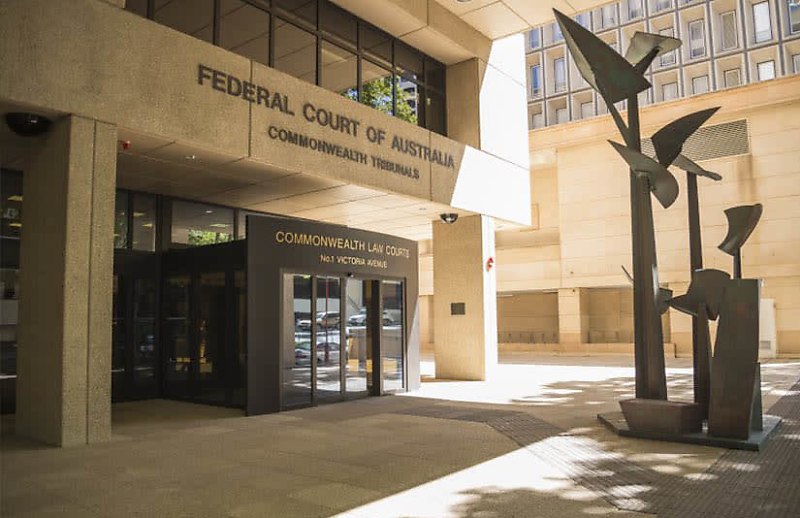
The case Commissioner of Taxation v Perez (No 2) [2026] FCA 658 examined whether a tax agent had engaged in conduct resulting in the promotion of tax exploitation schemes during the period from late 2014 to March 2016.
The Commissioner of Taxation sought declarations from the Court that Narciso Jose Perez had contravened section 290-50(1) of Schedule 1 of the TAA 1953.
The commissioner alleged that Perez had promoted 12 tax-exploitation schemes involving eight taxpayers. Each of the alleged schemes involved the taxpayer claiming notional deductions for expenditure on research and development (R&D) activities. Perez operated a consulting business, Grow Fast, which purported to advise clients on the R&D tax incentive.
Perez received client referrals for his services from Sara-Beth Cleaves, who operated a consulting business for SME business owners.
Cleaves had an arrangement with Perez whereby, through her business, Design & Construct, she received a percentage of the fee each client paid to him that she had referred.
Bryan Santos also referred prospective clients to Perez for potential R&D claims and received an upfront payment or a portion of the fee payable to Grow Fast Consulting under a supply of services agreement.
The eight taxpayers who were clients of Perez included Brandon Industries Pty Ltd in Victoria, Cherry Beans Coffee Pty Ltd, CMP Pacific Global Pty Ltd, Concept Roasting Pty Ltd, Fresco Gourmet Pty Ltd, Icon Integration Pty Ltd, Peaberrys Gourmet Coffee Pty Ltd, and Scaffold Logistics Pty Ltd.
An alternative case was also put forward by the commissioner, alleging that Perez was the promoter of a single tax exploitation scheme in that the alleged conduct across the various taxpayer schemes constituted "a single unified arrangement or course of conduct by him".
The commissioner also advanced a further alternative case that Perez's conduct resulted in Bryan Santos being a promoter of a tax exploitation scheme in respect of Cherry Beans, Concept Roasting and Peaberrys and/or Sara-Beth Cleaves being a promoter of tax exploitation schemes in respect of Fresco Gourmet and Icon Integration.
The commissioner alleged that, over a series of meetings, telephone calls, and emails, Perez, Cleaves, or Santos met with prospective clients to discuss the R&D tax incentive.
Based on the commissioner's submissions, during these meetings, Perez, Cleaves or Santos explained the R&D tax incentive scheme, its process and what was involved in making an R&D claim, and discussed the possibility of the prospective client benefiting from the R&D grant.
Perez was promoted as a tax agent who held an R&D licence and was an R&D specialist with experience successfully assisting businesses in making R&D claims.
Perez, Cleaves or Santos also allegedly advised prospective clients that their business activities were eligible for an R&D claim. The ATO noted that in the case of Cleaves and Santos, the advice was caveated.
Prospective clients were also allegedly advised that Grow Fast Consulting could assist in lodging the relevant documents to make an R&D claim, in exchange for a fee payable to Grow Fast Consulting.
The Court declared that the R&D claims by all eight companies constituted tax evasion schemes.
In one of the claims for the R&D tax incentive for Brandon Industries, Perez claimed it for a Click and Collect project.
Justice Geoffrey Kennett said that if Perez had studied the definition of R&D activity in any serious way, "it would have been apparent to him that the Click and Collect project did not qualify".
He also noted that the amounts put forward as representing expenditure on the Click and Collect project were "largely if not wholly fabricated".
Justice Kennett said assertions by Perez to Brandon Industries that the claim was legitimate and in accordance with the statute were therefore "either simply dishonest or made without any regard to the true factual or legal position".
In R&D tax incentive claims by other companies, the court noted examples in which the amounts claimed as R&D expenditure were either completely unsubstantiated or significantly overstated. There were also amounts claimed that bore no relationship to any expenditure actually incurred for the relevant R&D activities.
The court found that Perez had contravened section 290-50(1) of the Tax Administration Act in respect of each of the taxpayer schemes.
"Perez’s conduct in relation each of the schemes […] was marked by an almost complete lack of curiosity as to the amount of time and money (if any) that his clients had actually expended on R&D activities," Justice Kennett said.
 Want to see more stories from trusted news sources?
Make Accountants Daily a preferred news source on Google.
