


 iscover
 ATO to review TR 2004/6 after commissioner's loss in Shaw decision
TaxThe ATO will review its guidance on the substantiation exception for travel and overtime meal allowance expenses in light of the Federal Court decision Shaw v Commissioner.
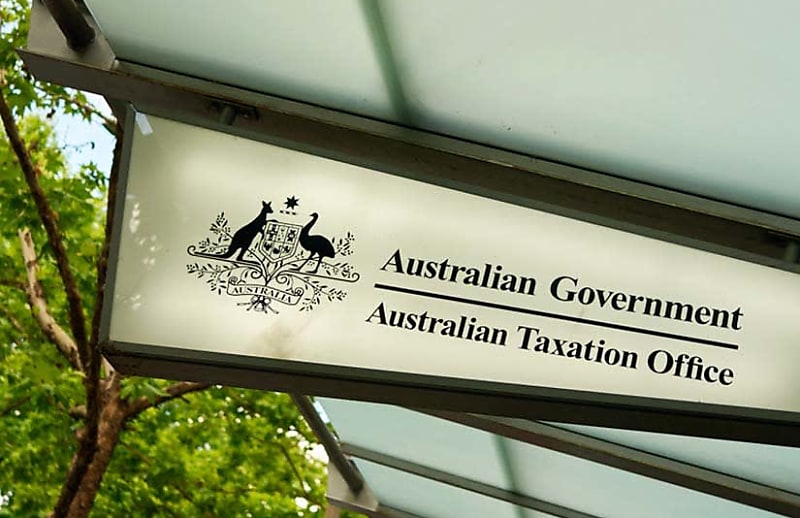
The Tax Office has issued a decision impact statement on the judgement Commissioner of Taxation v Shaw [2026] FCA 197, which was handed down by the Federal Court in early March.
The court determined that the taxpayer, a long-haul truck driver, was entitled to claim $32,782.50 in meal expense deductions.
The driver had calculated his meal expenses by multiplying the number of days he was away from home by the maximum reasonable daily allowance set out in TD 2020/5, which was $105.75. The truck driver and his accountant assumed they were not obliged to provide receipts or other documentary evidence to support his claim because it fell within the limits set out in TD 2020/5.
Following the decision, the ATO said it would review the impact of the decision on related advice and guidance, including Taxation Ruling TR 2004/6 Income tax: substantiation exception for reasonable travel and overtime meal allowance expenses.
The Tax Office said it will also consider whether its practical compliance guideline about claiming and substantiating work-related travel expenses is appropriate.
"We will also ensure that the annual Taxation Determination setting out the reasonable travel and overtime meal allowance expenses amounts for the 2026–27 income year is updated accordingly."
The Federal Court found that the substantiation rules, including the exceptions, in Division 900 do not provide the qualification for a deduction.
Rather, to qualify for a deduction, the work expense must come within a provision of the act 'outside' Division 900 – in this case, the work expense had to meet the requirements for a deduction under subsection 8-1(1), the ATO noted in its decision impact statement.
"Therefore, to demonstrate that an amount spent by an employee on food or drink while travelling for work purposes is deductible, it is necessary for the employee to establish that the expense was incurred in producing the employee's salary or wages. If that is demonstrated, it may also be necessary to substantiate the expense by getting written evidence that meets the requirements of Division 900."
The ATO also stressed that the publication of reasonable amounts in TD 2020/5 does not relieve a taxpayer of the requirement to demonstrate that the amount claimed qualifies as a deduction.
"For claims under the maximum reasonable amount in TD 2020/5, the Federal Court maintained that 'there is no need to meet the specific substantiation requirements in Division 900, but there remains a need to substantiate deductibility'," it said.
"When it comes to considering the nature of the proof that may be required to 'substantiate' deductibility in such cases, a taxpayer would not be expected to keep detailed records of the kind that would otherwise be required to meet the Division 900 substantiation requirements."
The ATO said that, in its view, the decision confirms that deductibility of expenses must first be established under section 8-1.
The commissioner, the ATO said, will continue to assess claims for meal expense deductions in light of all relevant evidence to ensure deductions are only allowed where the statutory requirements under section 8-1 are satisfied.
"This includes consideration of whether expenses were incurred in gaining or producing assessable income and whether any private component requires apportionment," it said.
Once deductibility is established, Division 900 may require certain specific substantiation requirements to be met, the Tax Office explained.
"While the exception from the substantiation provisions in section 900-50 or seeking relief from the effects of failing to substantiate in section 900-200 may relieve taxpayers from complying with the formal substantiation requirements in Division 900, neither provision dispenses with the requirement to establish that the claimed expenses were incurred in gaining or producing assessable income within the meaning of section 8-1," the ATO said.
"While the taxpayer still bears the burden of establishing the deductibility of expenses, the commissioner should not insist on a taxpayer keeping detailed records of the kind required to meet the substantiation requirements in Division 900 when an operative exception or relief from compliance with those requirements applies."
However, the ATO stressed that the decision does not, in its view, establish that particular forms of evidence, including bank statements or oral testimony, will always show a consistent pattern of travel and eating and spending habits, and be sufficient to demonstrate that the meal expenses have been incurred in gaining or producing assessable income under section 8-1.
The Tax Office said the decision also does not remove the need to consider apportionment or meal expenses where those expenses relate in part to private purposes. Whether the evidence is adequate to establish a broad mechanism for apportionment will depend on the facts and circumstances of each case.
"[Nor does it] provide an automatic statutory deduction when the meal expenses claimed are within the Commissioner's published guideline on 'reasonable amounts'."
The ATO has invited tax professionals to contact the Tax Office if there are any consequences that were not identified in the decision impact statement.
 Want to see more stories from trusted news sources?
Make Accountants Daily a preferred news source on Google.
