


 iscover
 Federal budget confirms major tax changes to trusts, CGT
TaxThe government has outlined the details of its proposed 30 per cent minimum tax on discretionary trusts, as well as changes to the CGT discount and negative gearing.
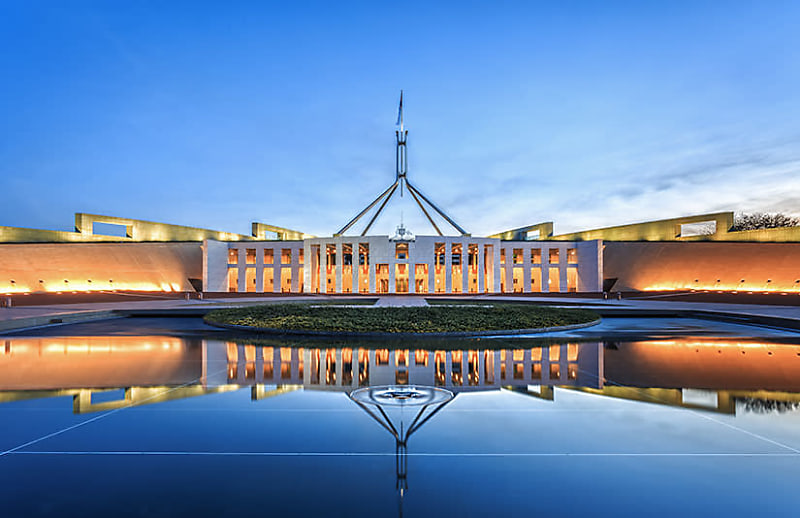
Treasurer Jim Chalmers has handed down the federal budget for 2026–27, unveiling the details of his major tax reform package.
As widely reported in the lead-up to the budget, the government plans to introduce a 30 per cent minimum tax on discretionary trust distributions.
Treasury confirmed that the minimum tax would not apply to other types of trusts, such as fixed and widely held trusts, including fixed testamentary trusts, complying superannuation funds, special disability trusts, deceased estates and charitable trusts.
It also stated that some types of income, such as primary production income, certain income relating to vulnerable minors, amounts to which non-resident withholding tax applies, and income from assets of discretionary testamentary trusts existing at the time of announcement, would also be excluded.
Under the changes, the government will also provide expanded rollover relief for three years, from 1 July 2027, to support small businesses and others who wish to restructure out of discretionary trusts into another entity type, such as a company or a fixed trust.
CPA Australia previously criticised the proposed trust tax as a "revenue grab", stating that the timing and lack of detail had caused panic and uncertainty among practitioners.
“To impose a blanket rate that sits at the higher end of tax rates in Australia isn’t about restoring equity – it risks introducing a punitive regime,” said CPA Australia tax lead, Jenny Wong.
“Trusts are not easily unwound and have a multitude of non‑tax purposes for their establishment. They are sitting ducks for the government to raise revenue, and the sudden imposition of a high tax rate on assets trapped in these structures is an unreasonable proposition."
Wong said that a 30 per cent minimum tax would result in low- and middle-income recipients paying more tax than they would have if they had earned that income directly.
“An effective personal income tax rate of 30 per cent typically applies to taxable income nearing $200,000, yet millions of middle‑income Australians receive trust distributions as part of normal business and investment activity,” she said.
The government has also confirmed that it will scrap the 50 per cent discount on capital gains and return to the pre-1999 model, which indexed gains for inflation.
The budget papers stated that from 1 July 2027, the 50 per cent CGT discount will be replaced by cost base indexation for assets held for more than 12 months, with a 30 per cent minimum tax on net capital gains. These changes will apply to all CGT assets, including pre-1985 CGT assets, held by individuals, trusts and partnerships.
Treasury said that transitional arrangements would limit the impact on existing investments by ensuring that the changes apply only to gains arising on or after 1 July 2027.
"The 50 per cent CGT discount will continue to apply to gains arising before 1 July 2027. Capital gains on pre-1985 assets arising before 1 July 2027 will remain exempt from CGT," it said.
"To maintain incentives for new housing supply, investors in new residential properties will be able to choose either the 50 per cent CGT discount, or cost base indexation and the minimum tax. Income support payment recipients, including Age Pension recipients, will be exempt from the minimum tax."
The government will also limit negative gearing for residential property to new builds.
Treasury outlined that from 1 July 2027, losses from established residential properties will only be deductible against rental income or the capital gains from residential properties.
"Excess losses will be carried forward and able to be offset against residential property income in future years. These changes will apply to established residential properties acquired from 7:30PM (AEST) on 12 May 2026," it said.
"Properties acquired prior to this time, including contracts entered into but not yet settled, will be exempt from the changes until disposed of. Eligible new builds will be exempt from the changes, ensuring the benefits of negative gearing are directed to investment that increases the housing stock."
Treasury also outlined that properties in widely held trusts and superannuation funds will be excluded under the changes, alongside targeted exemptions for build-to-rent developments and private investors supporting government housing programs.
CPA Australia previously warned that changes to the CGT discount and negative gearing risked sparking unintended consequences as the tax settings interacted with inflation, superannuation, investment behaviour and rental supply.
“Any reform to capital gains tax and negative gearing should consider the real‑world impact on renters, particularly households already facing sustained cost‑of‑living pressures," said Wong.
"Certainty in the tax system matters. Abrupt or narrowly framed changes can undermine confidence and increase complexity for investors and their advisers."
The government also announced late last week that it would make the instant asset write-off (IAWO) a permanent feature of the tax system, as contained in the budget.
The Tax Institute has welcomed the Treasurer's announcement, describing it as a practical and long-overdue step to support business investment and productivity.
The Tax Institute’s head of tax and legal, Julie Abdalla, said that for many years, small and medium-sized businesses, and their advisers, have endured uncertainty about whether the measure will be extended for another year.
"Often enabling legislation has been enacted too late in the year to do anything more than confirm anticipated tax treatment of decisions already made by taxpayers rather than encourage investment," said Abdalla.
“We are pleased that the government has committed to moving away from ad-hoc extensions of the IAWO. Doing so will provide certainty to small and medium-sized businesses by removing the ongoing cycle of temporary extensions that has created uncertainty and compliance complexity in recent years.”
Speaking earlier today, Chalmers said this year's budget would be about helping people through the global oil shock and reforming Australia's tax system and economy for the future.
"The developments in the Middle East are a reason to act more decisively and more urgently, not to kick the can down the road. There are substantial issues in our economy, in our tax system, in our housing market, it would be easier to leave them unattended, but it would be wrong," said Chalmers.
"This budget makes a number of difficult decisions in the near term and in the longer term to get our budget into better nick, to reform our tax system and to deal with some of these issues which have been left unattended for too long. The budget deals with major issues like inflation and productivity, tax and housing and intergenerational fairness as well."
 Want to see more stories from trusted news sources?
Make Accountants Daily a preferred news source on Google.
