


 iscover
 No FBT-free joyride for firm Ferrari used on winery trips, tribunal rules
TaxA Perth accountant has failed to convince the Administrative Review Tribunal that a Ferrari purchased through his company was primarily for work purposes and should not be subject to FBT.
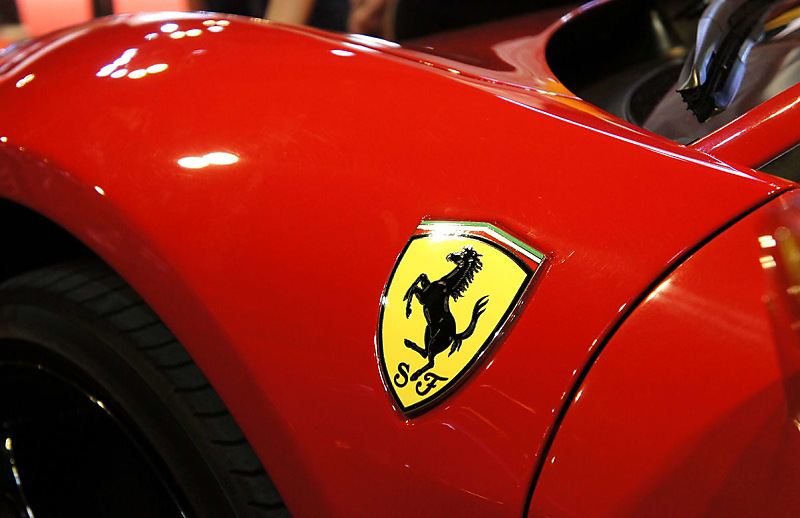
Last Friday (13 February), the Administrative Review Tribunal (ART) rejected a director’s appeal against amended fringe benefit tax (FBT) assessments concerning a Ferrari purchased through his Perth-based accounting firm.
In 2013, the company bought a second-hand Ferrari for $346,140, purportedly to be used by sole director, ‘Mr Jones’, to drive to and from work, to visit clients and drive between the firm’s various offices in the Perth metropolitan area.
In March 2021, the Commissioner of Taxation commenced an audit of the firm’s tax affairs. The ATO determined the firm had FBT liabilities stemming from the car benefit provided to Jones, being the private use, or availability for private use, of the Ferrari.
Appealing amended assessments from the ATO, Jones argued that his personal use of the Ferrari was negligible and almost exclusively related to travel between his home and work.
However, while he initially told the tribunal that he had never used the Ferrari to carry passengers, he later admitted that he took his girlfriend to Margaret River on various trips in the Ferrari.
“Once per year I would drive down South to Margaret River, Bunker Bay and Busselton where I had rental properties. The purpose of the trip each year was to complete property inspections of each of these properties,” he told the tribunal.
“Apart from monitoring my investments, a small portion of the time down South would involve having lunch at some wineries.”
The tribunal concluded that Jones’ trips to Margaret River, which did not feature in his log books submitted to the Commissioner of Taxation, were considered private use.
“I cannot be satisfied that Mr Jones’ private use of the Ferrari was ‘minor, infrequent and irregular’ as required by section 8(2)(b)(ii) of the FBT Act,” the tribunal declared.
The tribunal also concluded that car log books submitted by Jones to the Commissioner of Taxation, purportedly demonstrating his use of the car, had likely been fabricated.
“In my view, the logbooks were most likely constructed in about April and June 2021, shortly before they were provided to the Commissioner, following the Commissioner’s requests for them. They are complete fabrications, and I place no weight on them,” tribunal documents read.
A central argument in the case was whether or not the car could be considered a “passenger vehicle” within the meaning of section 8(2)(a)(ii) of the FBT Act.
To answer this question, an expert witness in car design, Michael Nranian, was called in to testify virtually from Wisconsin, USA. He argued that the Ferrari was not designed for the principal purpose of carrying passengers.
“The Vehicle is not predominantly designed for carrying passengers, and at best can carry only a passenger, in addition to the driver. Rather the Vehicle is [a] highly exclusive sports car that is born to race,” he told the tribunal.
However, the tribunal did not accept this opinion, citing marketing materials that described the car as being designed to be driven in “comfort mode for everyday driving.”
It also described Nranian as “combative,” which it attributed to cultural differences between Australia and the US, and time differences, which resulted in his testifying late at night.
“Nranian was a more combative witness in cross-examination than is the norm for experts, and I found he tended to stray into advocacy for the Applicant,” tribunal documents read.
“Both of these matters are likely explained by cultural differences, and differences in the legal systems, between our two countries. I also accept that some of the frustration Mr Nranian expressed in his answers in cross-examination came from the very late hour at which he was giving evidence.”
Initially, the Commissioner of Taxation calculated the taxable value of the Ferrari on a cost price of $346,140 for the income years ending 31 March 2014 and 2018, and $230,760 in the following years.
In a concession from the Commissioner, the parties agreed that the cost base of the Ferrari should exclude road costs totalling $20,927, meaning the taxable value of the Ferrari would be calculated using a cost base of $325,212.65, not $346,140.
The tribunal concluded that the Ferrari-related amended assessments must be remitted by the accounting firm to the Commissioner for recalculation, in accordance with the agreed cost of the car.
Case citation: MXSN and Commissioner of Taxation (Taxation) [2026] ARTA 186 (13 February 2026).
Correction: An earlier version of this article referred to the Administrative Review Tribunal (ART) as a court. The ART is a tribunal. The article has been amended to reflect this distinction.
 Want to see more stories from trusted news sources?
Make Accountants Daily a preferred news source on Google.
