


 iscover
 Tribunal slams self-represented taxpayer over non-existent cases, misused legal authorities
TaxA self-represented taxpayer has faced sharp rebuke for citing phantom cases, twisting established tax law, and leaning on irrelevant precedents in a high-stakes dispute with the ATO.
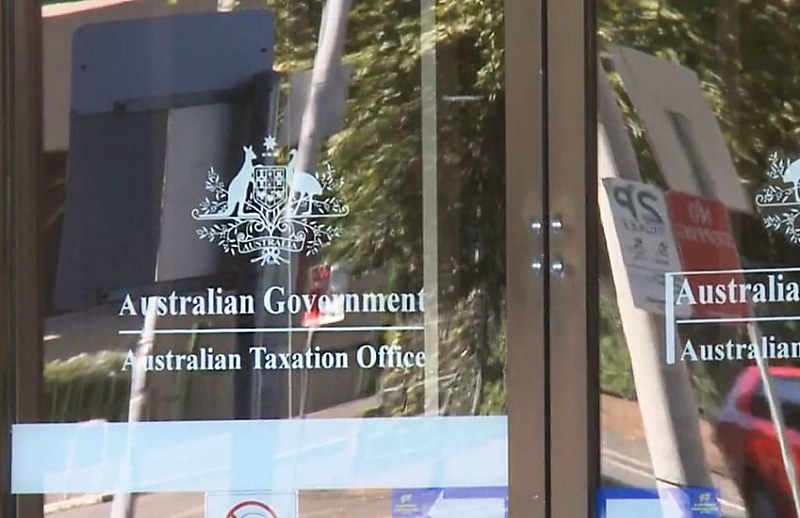
The Administrative Review Tribunal has delivered a sharp rebuke to a self-represented taxpayer for citing non-existent cases, misrepresenting established legal authorities, and relying on irrelevant precedents in a dispute with the ATO.
The criticism emerged from a decision handed down on 12 January, involving Alexander Smith, who challenged whether his French Bulldog breeding operation qualified as an enterprise for GST purposes under the A New Tax System (Goods and Services Tax) Act 1999.
Among the tribunal’s most damning observations was that several cases cited by Smith could not be found in any recognised law report or legal database.
In particular, J. Dunne highlighted Smith’s reference to Re Jowett v Commissioner of Taxation [2011] AATA 433, which he claimed supported his argument.
In reality, that citation referred to a completely different case that said nothing about reconstructed records. J. Dunne went so far as to declare that the case does not exist at all, dismissing it as a complete “hallucination”.
Even where legitimate authorities were available, the tribunal found Smith’s references were misapplied, misunderstood, or entirely irrelevant to the arguments he advanced.
Smith also relied on two immigration law cases in his argument, but J. Dunne noted that they “do not stand for the proposition asserted” and were irrelevant to the issues before the tribunal.
In his closing submissions, Smith also attempted to rely on Land Tax v Jowett [1930] HCA 51, but J. Dunne pointed out that the case had nothing to do with the argument Smith was making and was entirely “irrelevant” to the matter at hand.
Dunne went further, suggesting that Smith referenced it “presumably on the basis the word ‘Jowett’ is in the title”, much like the previous fictitious case he had attempted to use.
Observing a pattern of errors consistent with the uncritical use of AI-generated legal material, J. Dunne issued a sharp rebuke to the tribunal over the reliance on artificial intelligence as a research tool.
J. Dunne emphasised that when AI is being utilised, it is essential to fact-check every case cited and ensure it has been properly read, warning that failing to do so risks the tribunal’s time
“Comments that if artificial intelligence is used as a research tool by litigants before the Tribunal, each case identified by artificial intelligence needs to be located on public websites (such as www.austlii.edu.au) and (assuming it exists) read in order to ensure it stands for the proposition for which it is cited before it is put to the Tribunal,” J. Dunne said.
“Otherwise, the Tribunal’s time and scarce resources are being wasted, as the Tribunal must look for cases that do not exist and read cases that have no relevance at all. Unfortunately, that is exactly what has happened here, whether artificial intelligence was used or not.
While the tribunal ultimately accepted key aspects of Smith’s position, the poor quality of his legal authorities undermined his credibility, leading to the rejection of large portions of his input tax credit claims and the upholding of findings of recklessness.
 Want to see more stories from trusted news sources?
Make Accountants Daily a preferred news source on Google.