


 iscover
 Court rejects directors' appeal in recent SG charge penalty decision
SuperThe Federal Court has found three directors liable for director penalties relating to unpaid SG charge arising from a failed company.
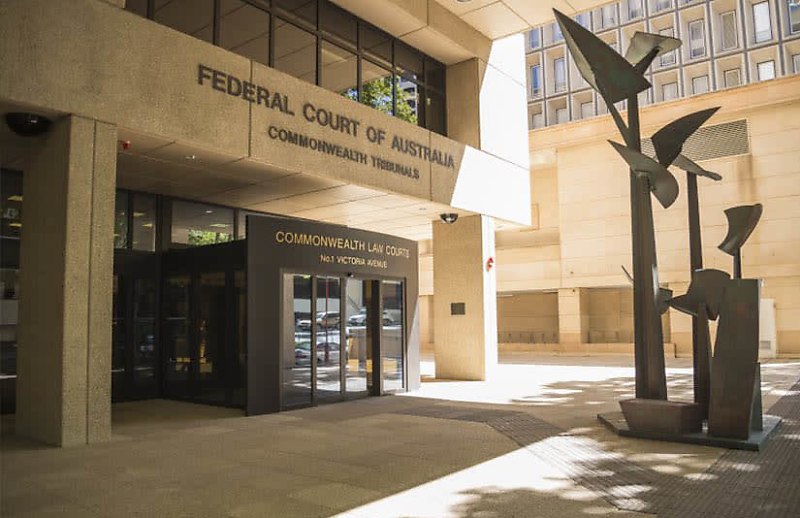
The decision, Ostwald v Commissioner of Taxation [2026] FCA 868, examined whether three directors were liable for superannuation guarantee charge penalties arising from superannuation guarantee shortfalls in the September 2016, December 2017 and March 2017 quarters.
The applicants in the case, Brendan Ostwald, Matthew Ostwald, and Daniel Ostwald, were directors of the company Ostwald Bros. Pty Ltd, which went into liquidation in November 2017.
Ostwald's superannuation guarantee for the quarter ending 30 September 2016 was due on 28 October 2016. On that day, $680,099.43 was debited from Ostwald's bank account. The payment was made to a clearing house. The superannuation guarantee was received by the employees’ superannuation fund on 31 October 2016.
Ostwald then failed to lodge its superannuation guarantee statement by 28 November 2016, as was required under section 33 of the Superannuation Guarantee (Administration) Act.
The superannuation guarantee for the quarter ending 31 December 2016 was due on 28 January 2017. Ostwald paid the superannuation guarantee for this quarter late. The amount was paid to a clearing house, and the superannuation guarantee was received by the employees’ superannuation fund on 6 February 2017.
Ostwald failed to lodge its superannuation guarantee statement by 28 February 2017, as was required under section 33 of the SGAA.
The company also paid the superannuation guarantee for the March 2017 quarter late and failed to lodge its superannuation guarantee statement by 28 May 2017, as was required under section 33 of the SGAA.
The company was then put into external administration in August 2017. It was placed into liquidation on 30 November 2017.
In February 2024, the Commissioner of Taxation issued each applicant a director penalty notice for the superannuation guarantee charge amounts.
These notices set out the unpaid SG charges, which included $1,329,153.97 for the September 2016 quarter and $1,513,382.89 for the December 2016 quarter.
In March 2024, the commissioner gave each of the directors another director penalty notice for SG charge amounts, which set out the unpaid SG charge amount for the March 2017 quarter at $1,478,021.33.
These notices were revised and reduced, with the commissioner issuing amended SG charge assessments for each quarter. The amended notices outlined that $468,060.04 in SGC was payable for the September 2016 quarter, $348,609.84 for the December 2016 quarter, and $87,687.50 for the March 2017 quarter.
The applicants in the case argued that the commissioner had failed to consider that SG was, in fact, paid by Ostwald for all of the quarters and that the superannuation guarantee was paid by Ostwald by the due date for the September 2016 quarter “meaning no SGC liability should have arisen for that quarter”.
However, Justice Kylie Downes said the applicants' submission misunderstood the legislation.
Justice Downes noted that while $680,099.43 was debited from Ostwald's bank account to be paid to the clearing house in respect of the September 2016 quarter, the employees’ superannuation fund did not receive their superannuation contributions until 31 October 2016. It was therefore paid three days after the due date.
"As such, Ostwald was liable to be assessed for SGC when the superannuation guarantee shortfall arose immediately after 28 October 2016," she said.
She also determined that Ostwald was liable to be assessed for SGC for the superannuation guarantee shortfalls that arose immediately after 28 January 2017 and 28 April 2017, for the December 2016 and March 2017 quarters.
"The Commissioner assessed SGC liability for each of the quarters and issued notices of assessment and amended assessment accordingly," Justice Downes said.
"For the purposes of Div 269, the SGC is deemed to be payable by the due days set out in section 33 of the SGAA. The production of a notice of assessment (such as an assessment of SGC) is conclusive evidence that the assessment was properly made and that, except in a proceeding under Pt IVC of the TAA, the amounts and particulars of the assessment are correct."
The applicants also said that the commissioner failed to follow his own policies, set out in PSLA 2011/18, PSLA 2007/1 (GA), and PSLA 2007/10, by failing to issue the director penalty notices until 2024.
However, Justice Downes determined that these complaints were "misconceived" as they did not fall within the scope of the Administrative Decisions (Judicial Review) Act 1977.
The directors' application was dismissed by the Federal Court.
 Want to see more stories from trusted news sources?
Make Accountants Daily a preferred news source on Google.
