


 iscover
Trust tax bill is a ‘nuclear option’, says STEP
BusinessThe association for trust and real estate professionals has called the proposed discretionary trust tax reforms “blunt”, “unfair”, and “regressive”.
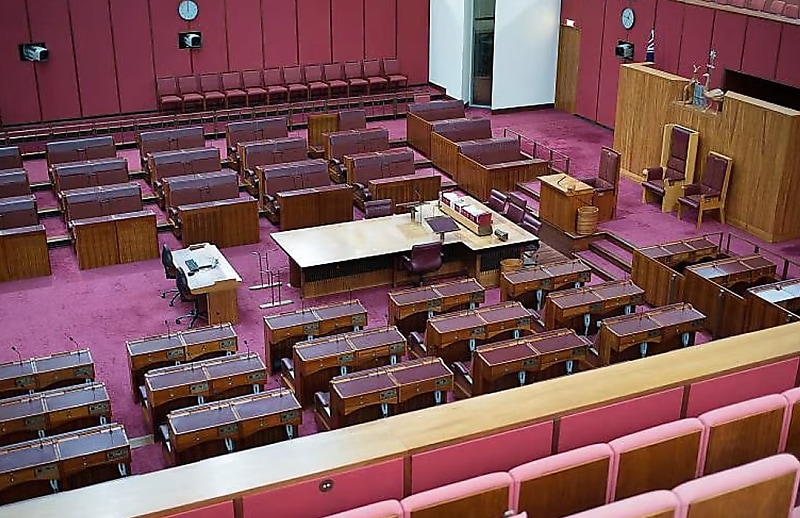
At the Senate Economics Legislation Committee parliamentary hearing on the proposed minimum 30 per cent tax on discretionary trusts, Jim O’Donnell, chair of the Society of Trust and Estate Practitioners Australia (STEP), said the industry body holds concerns about the proposals on trusts across the board.
He argued that the bills are a “deliberate attempt” to stop the use of almost all existing trusts and an “attack” on the institution of trusts, which he noted had been recognised for hundreds of years and legitimately used in Australia for more than a century.
“This new proposed law is blunt. It’s unfair. It’s regressive,” O’Donnell said.
“It penalises lower income earners. It introduces a new double taxation on distributions to a company. It goes against that historical treatment in Australia of corporate profits.
“The approach taken by this bill is a nuclear option, and, unfortunately, a nuclear weapon causes a lot of collateral damage to those innocent civilians, the beneficiaries, the vulnerable, those who cannot manage money themselves, the trusts are established to protect.”
O’Donnell said not all trusts are used to minimise tax using corporate beneficiaries, and applying the minimum tax on all of them (excluding the “narrow categories” of carve-outs) could have adverse consequences.
“The bill isn’t fixing the tax integrity issues. It’s just creating problems,” O’Donnell said.
The message from STEP, O’Donnell said, was to urge the committee to recommend that the bills do not proceed in their current form. He said the body believes the Senate should have the opportunity to consider all legislative tranches and instruments as a complete package.
If this is not possible within the existing timetable, O’Donnell suggested that the commencement and rollover date should be changed.
Delving into the alternatives provided in the bill to paying the 30 per cent minimum tax, O’Donnell recounted that the options are the excluded election trust election, and the restructuring rollover. However, he rejected both options, arguing that they are not yet workable as measures.
He said the EET regime is too rigid and subject to trust complications, while the restructuring rollover relief does not go wide enough. He said, however, that this option is helpful and could provide “very welcome” relief for those who are willing to restructure into a company or a fixed trust.
“There are consequences that need to be worked through and adverse costs and duties that need to be looked at. These are issues that need to be worked through and resolved,” he said.
Don’t rush deadlines when system is unfinished
Deputy chair of STEP Australia’s policy and advocacy committee Kimberley Martin echoed O’Donnell’s suggestion that if the remaining rules cannot be finalised, exposed, or thoroughly tested within the current timetable, the timetable should change, “not the standard of the scrutiny applied to the legislation”.
“Why should legislation and existing deadlines be rushed when the complete system is not ready?” Martin said.
“We ask the committee to recommend that the Senate not pass the bills until all substantive legislative tranches have been introduced and material legislative instruments released.”
She continued that under the proposed package that asks trustees to choose between remaining subject to the 30 per cent minimum tax, restructuring, or entering into the EET regime, each comes with expensive consequences that may be difficult or impossible to reverse.
“Yet, the rules governing those choices are incomplete, with important mechanisms left to legislative instruments that have not yet been made. Trustees should not be asked to make binding decisions on incomplete rules,” she said.
If the committee does not recommend an amended timetable, Martin urged it at the “absolute minimum” to recommend the substance of the testamentary trust amendments moved by independent MP Kate Chaney.
One of the changes is to protect wills executed before 1 July 2028.
“The government says that genuine testamentary trusts are excluded, but that is only part of the story. The exclusion is conditional, and it turns on a test of when a trust is established. The bill doesn’t define that word,” Martin said.
“The explanatory memorandum says that ’generally’ it is when property transfers to a trustee.”
The explanatory memorandum of the bill states that only trusts that are established for genuine testamentary purposes as a result of a will, codicil, intestacy, or court order, and consist of assets from the deceased person’s estate transferred to the trust will be exempt from the minimum tax. It must satisfy the integrity rules and other requirement rules set out in the bill.
Martin said leaving it undefined will result in significant uncertainty, adding that relying on when a trust is established risks creating an “arbitrary national trap”.
“A will signed decades ago may face new restrictions merely because the will maker dies, probate is granted, or estate assets are transferred after 1 July 2028. The will maker controls none of those events,” Martin said.
“The benchmark should be the date that the will is signed and execution that is objective, verifiable and controlled by the will maker.”
 Want to see more stories from trusted news sources?
Make Accountants Daily a preferred news source on Google.
