


 iscover
Taxpayer loses nearly $400k term deposit to the Commissioner of Taxation
BusinessA taxpayer has failed to prove his allegations of fraud, misfeasance, and maladministration against the ATO after it discovered over $2 million in taxation liabilities and issued his bank a garnishee notice on his nearly $400,000 term deposit.
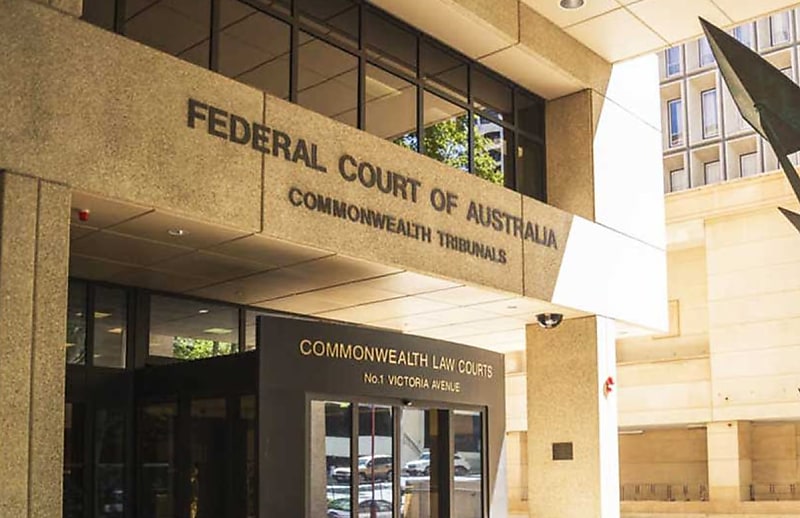
A taxpayer has lost his application for a judicial review of a garnishee notice for over $300,000 after the Commissioner of Taxation discovered that he owed over $2 million in taxation liabilities.
In the Federal Court of Australia, Justices Roger Derrington, Michael Feutrill, and Samuel Vandongen dismissed an appeal against a want for judicial review of a garnishee notice by taxpayer Li Zhang, who was also made to pay the Commissioner of Taxation’s costs.
“The initial assessment of Mr Zhang’s taxation liability for the 2003 income year was issued on 5 March 2004. It showed that his taxable income was $19,104 and that the tax on this income was $2,227.68,” the court said.
In 2016, the commissioner issued an amended assessment, which revealed an amended taxable income of $2,558,033 and tax payable of $1,189,655.51.
“For some time after issuing that assessment, the Australian Taxation Office (ATO) considered that recovery action against Mr Zhang was uneconomical and had determined not to expend time and money pursuing the debt,” the court said.
“Subsequently, on 14 July 2016, further entries were made to record that … his total indebtedness was $2,513,693.24, comprising the outstanding income tax and general interest charges.”
In his submissions to the court, Zhang said he believed that this zeroed his taxation liabilities.
However, when the ATO sent a letter informing him that the tax was still owing, Zhang asserted that this decision was based on faulty documents.
“You still owe this amount and interest will continue to be charged. Any income tax refund or activity statement credit you claim in the future may be used to reduce your debt,” the letter said.
“You can make payments toward this debt at any time by contacting us. If we receive information that your circumstances have changed we may contact you to arrange payment.”
This gave rise to Zhang’s claim that the evidence of debt leading to this letter was incorrect.
“The debt not existed, so the Commissioner was not in a position to re-raise any debt because there’s no debt there. That’s the first thing. Secondly, the reason why they couldn’t re-raise the debt is because they used a false document. The document is not real. It’s made up,” Zhang said in a case management hearing in early 2025.
The court said: “He seemed to suggest that, because the Commissioner had previously determined not to pursue him in relation to any taxation debt, the debt no longer existed. On that basis, he appeared to allege that any document identifying any indebtedness was somehow fabricated.”
The Commissioner of Taxation then approached Zhang’s bank, Hong Kong and Shanghai Banking Corporation (HSBC), in early 2024 and discovered a term deposit in Zhang’s name, which had a balance of $391,735.78.
The commissioner sent the bank a garnishee notice for this amount, and the bank complied.
“Thereafter, he made several conclusory allegations of conscious maladministration, bad faith, tort of misfeasance in public office, targeted malice, dishonest abuse of power, and actual intent to cause harm/injury, though the precise basis for each was not identified,” the court said.
“Anything said by him on that occasion was far too oblique to sustain the argument that he had raised in a proper way the issues he now seeks to advance.”
While Zhang attempted to make a case that it was the ATO officers who committed a wrongdoing that led to the garnishee notice, the court said the issues arose from his lack of understanding of the operations of the ATO.
“There is no arguable case of misconduct on the part of the Commissioner or the ATO. None of the documents produced by the ATO on which Mr Zhang relies is suggestive of any wrongdoing,” the court said.
“His application did not raise any allegations of fraud or maladministration of the nature which he seeks to agitate, and her Honour rightly refused to deal with those extraneous matters. In any event, Mr Zhang was unable to demonstrate that the allegations bore any substance.”
Thus, the court dismissed Zhang’s appeal and ordered that he pay the commissioner’s costs.
The case citation: Zhang v Commissioner of Taxation [2026] FCAFC 137
 Want to see more stories from trusted news sources?
Make Accountants Daily a preferred news source on Google.
