


 iscover
 Can paying tax in the wrong year prevent being taxed in the right year? Court says no
BusinessA recent court case has shown that a taxpayer paying CGT on a sold property in the wrong year did not stop the ATO from taxing him in the correct year.
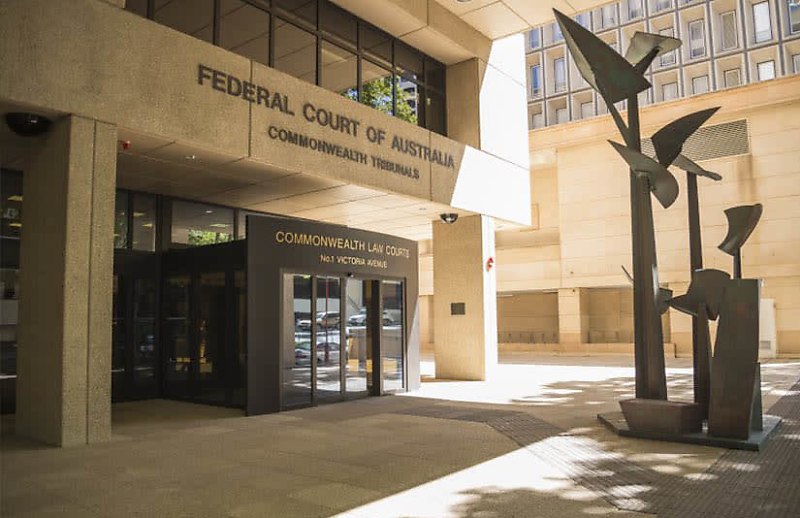
A taxpayer who declared a property-related capital gain in the wrong financial year has lost his Full Federal Court appeal to overthrow an initial court decision upholding the Commissioner of Taxation’s amendment of the income tax return, highlighting that a capital gain is taxed in the financial year that the contract is signed, rather than the year of settlement.
At the same time, the Commissioner of Taxation also lost their cross-appeal to allow the ATO to correct an erroneous assessment in an income tax return from another year.
In the case of Sunna v Commissioner of Taxation [2026] FCAFC 133, Edward Sunna was appealing the judgment of the primary judge under Part IVC of the Taxation Administration Act 1953 (TAA) in relation to a property he sold in 2019.
In June 2019, Sunna entered into a contract for the sale of a capital gains tax (CGT) asset. He sold a unit in Sydney that he had acquired in March 2002 for $5,516,500, but the contract of sale did not settle until August 2022.
Shortly thereafter, in 2020, the taxpayer received payment of a deposit of $2,596,000 under the terms of the contract of sale.
In May 2020, the taxpayer lodged his income tax return for the 2019 year, but that return did not report a net capital gain from the sale of the CGT asset. The commissioner issued an original assessment for the 2019 year to the taxpayer. That assessment reflected the amounts reported in the taxpayer’s tax return for the 2019 year.
In October 2020, Sunna lodged his income tax return for 2020, which reported a total capital gain of $492,807, applied capital losses from prior years of $138,129, and reported a net capital gain of $354,678.
A week later, the commissioner issued an original assessment for 2020, which reflected the amounts reported in the taxpayer’s income tax return for 2020.
When settlement took effect in August 2022, Sunna transferred ownership of the CGT asset to the purchaser. He received the balance of the sale price less a foreign residential capital gains withholding amount (which was withheld and remitted to the commissioner).
Sunna lodged his income tax return for the 2023 financial year in July 2023, which reported a net capital gain of $893,652 and claimed the foreign residential capital gains withholding credit.
The commissioner undertook an audit of the 2023 income tax return and Sunna’s treatment of the sale of the CGT asset. During the course of the audit, Sunna acknowledged that his calculations of his total capital gains in both the 2020 and 2023 years were incorrect.
He provided the commissioner with the corrected calculations for the total capital gain made on the sale of the unit (3,531,621) and net capital gain for the 2019 year (2,390,625).
Sunna also “asserted” that the commissioner was out of time to amend the original assessment issued for the 2020 year and, as such, did not have the power to amend the original assessment for the 2019 year.
After completing the audit, the commissioner issued to Sunna on 20 December 2023 the amended assessment for the 2019 year, which included a net capital gain of $2,390,624 (including the capital gain on the sale of the CGT asset), and a notice of assessment for the 2023 year, which included no net capital gain.
In addition, the commissioner issued the amended assessment for the 2020 year in January 2024, which included no capital gain.
However, Sunna objected to the two amended assessments. First, arguing that the commissioner was not authorised to amend the assessment for the 2020 year to remove a capital gain reported by the taxpayer in relation to the CGT event and assessed in that year, the tax on which was paid by the taxpayer.
Second, Sunna argued that the commissioner was not authorised to amend the assessment for the 2019 year to assess the capital gain in relation to the same CGT event assessed in the 2020 year, as this would result in the double taxation of the same CGT event twice.
Why the judges dismissed the arguments
However, Justices Lisa Anne Hepse, Justice James Stellios, and Justice Amelia Wheatley shot down Sunna’s arguments. In their judgment, they said that an incorrect assessment in one year does not prevent a correct assessment in another year, as this finds no support in the legislative scheme or the authorities.
“The fact that an amount may have been incorrectly assessed in a different year of income does not relieve the Commissioner from an obligation to correctly assess in another year of income,” the judgment said.
It also said that at most, the original assessment notice for the 2020 year is conclusive evidence that Sunna was assessed on a taxable capital gain in that year. It does not prove that the CGT event occurred in that year of income.
“The existence of the original assessment for the 2020 year does not prevent the commissioner or a court from forming a view about the correct operation of the taxing statute on the “taxable facts” in a different year of income,” the judgment said.
The commissioner’s cross appeal was also dismissed. The full court stated that while they could retrospectively assess the completed property sale in 2019 because that was when the contract of sale was signed, they could not use the Income Tax Assessment Act to remove the erroneous capital gain from the 2020 assessment.
Sunna could have sought acceptance of a late objection to the original 2020 assessment and allowed correction, but the judgment noted that the taxpayer did not seek to object to the original assessment for the 2020 year because he was not “dissatisfied” with it.
“[This] is a problem of the taxpayer’s own making and entirely within the taxpayer’s control,” the judgment said.
Ultimately, both Sunna’s appeal and the commissioner’s cross-appeal failed, and Sunna was ordered to pay 90 per cent of the commissioner’s costs.
 Want to see more stories from trusted news sources?
Make Accountants Daily a preferred news source on Google.
