


 iscover
 Taxpayers’ NZ properties not safe in $2.4m legal expenses recovery action
BusinessTaxpayers have failed in their interlocutory application against the Commissioner of Taxation to protect their New Zealand properties from paying $2.4 million in legal expenses.
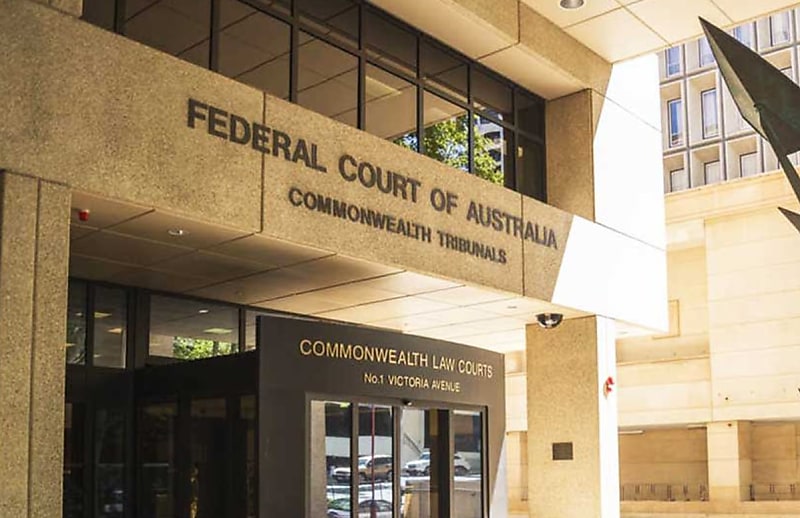
The Federal Court of Australia has scrapped taxpayers’ interlocutory application against the Commissioner of Taxation to alter freezing orders on numerous New Zealand properties, ruling that it was not satisfied that these assets could not be used to pay for overdue legal costs.
The taxpayers owed up to $2,400,000 in legal expenses incurred in connection with two debt recovery proceedings.
Freezing orders in a 2022 interlocutory application allowed the taxpayers to mortgage several New Zealand properties to obtain an advance to pay off these legal expenses.
Records revealed that two of the three New Zealand properties had a mortgage with ANZ Bank of about NZD$2 million, and that the third property was purchased without a legal mortgage in November 2016 for NZD$3.2 million.
The court also found that the applicant received four loans in total, with only one fully paid off, leaving NZD$3.7 million outstanding to the creditor.
The taxpayers sought to alter the freezing orders on the three properties, claiming they were subject to a “security interest” to the creditor for the three unpaid loans; thus, the properties could not be used to raise funds for legal expenses.
Further, the taxpayers claimed they had no other assets or funds from which to pay the legal expenses, which the commissioner rejected.
“The Commissioner contends that the Applicants have not sufficiently established that they do not have recourse to other assets in New Zealand which are not the subject of the freezing orders and which could be used to pay their reasonable legal expenses,” Justice Amelia Wheatley found.
Justice Wheatley agreed that the applicants did not bear the onus of proving they had no other assets through which the permitted legal expenses could be paid.
Despite this, after considering all the evidence, Judge Wheatley said she was not satisfied that the taxpayers had no alternative source of assets or funds to pay the legal expenses, nor that the properties could not be used to pay the $2,400,000 in legal expenses.
Justice Wheatley dismissed the taxpayers’ interlocutory application to alter the freezing orders with costs.
The case citation: Yu v Commissioner of Taxation [2026] FCA 1344.
 Want to see more stories from trusted news sources?
Make Accountants Daily a preferred news source on Google.
