


 iscover
 Hold at 4.35% the ‘least-worst option’ as economists predict impending cash rate hike
BusinessEconomists have speculated that the RBA’s recent cash rate hold was intended to buy time to observe the impacts of previous price hikes, and are forecasting further rate hikes soon.
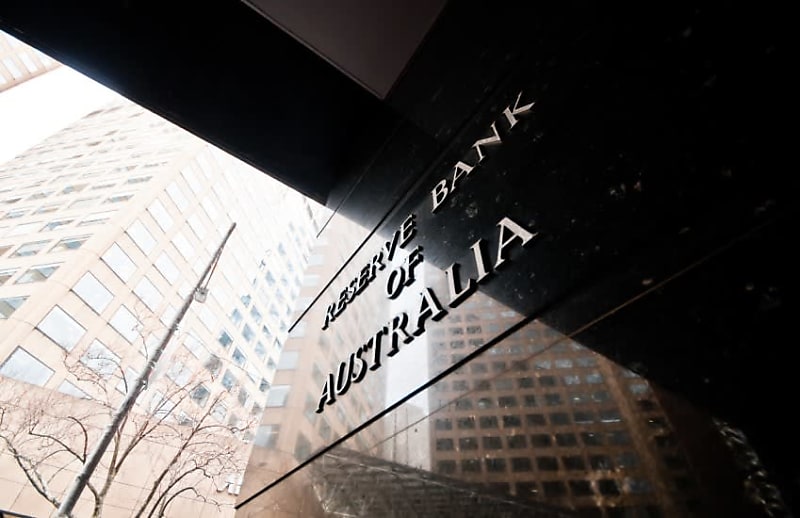
Economists call the RBA Monetary Board’s cash rate hold on Tuesday (7 August) the “least-worst option”, with predictions of a hike sooner rather than later – forecasts as early as September or November.
Following the board’s unanimous decision to hold the cash rate, despite a hike also being considered, CreditorWatch identified signs of a further tightening of monetary policy later in the year.
CreditorWatch said the rate hold merely marked the board’s need for more time to see how the previous three rate rises play out and to assess whether the economy and inflation are evolving in line with forecasts.
Ivan Colhoun, chief economist at CreditorWatch, said: “I remain comfortable with the view that the RBA will likely have to raise interest rates further to ensure inflation returns to target.”
Colhoun said that this was likely possible for the September or November meetings.
An ‘appropriate’ decision
BDO chief economist Anders Magnusson called the board’s hold on the cash rate “appropriate”.
“Holding today is sensible in light of the revised inflation forecast. The cash rate will need to remain restrictive until there is clearer evidence that persistent underlying inflation is returning sustainably to target,” Magnusson said.
“While the immediate energy shock appears to be easing, persistent underlying inflation remains a concern and there is little basis for the RBA to consider reducing rates any time soon. The current restrictive setting remains necessary to contain price pressures and keep inflation expectations anchored.”
Magnusson noted a larger issue: the economy's poor performance.
“Costs have increased without the productivity gains needed to afford them, which is the essence of inflation. Interest rates will need to remain higher for longer until either economic growth slows enough to reduce those pressures or productivity improves,” he said.
“This weak productivity performance reflects an economy that has become increasingly dependent on government spending and intervention, and less reliant on private investment and innovation. Monetary policy can suppress demand, but it cannot deliver the productivity improvements needed to sustainably lift wages and living standards.”
Stephen Smith, partner at Deloitte Access Economics, said that that holding was the “least-worst option”.
“Against this backdrop, today’s relatively dovish statement from the Monetary Policy Board together with the accompanying forecasts indicate the Reserve Bank increasingly feels its job may be done in the absence of a further upside inflation surprise,” Smith said.
“However, another rate rise in 2026 cannot be fully ruled out. Much of the recent improvement in the headline inflation result came from lower petrol and travel prices, assisted by the temporary reduction in fuel excise,” he said.
Widening sector divergence
NAB’s latest Business Survey revealed a growing disparity in business confidence across sectors.
The survey revealed that, alongside construction and mining, finance, property, and business services bounced back strongly, while weaker sectors such as manufacturing and wholesale trade improved.
Macro pressures, including the AI investment boom, have led to increasingly divergent performance across sectors, with consumer-facing sectors such as retail trade, recreation, and personal services struggling, while mining and construction thrived, with construction reporting the best business conditions for the second consecutive month.
“The divergences likely reflect the negative effects of interest rates, fuel prices and wage rises on some sectors, and the strength of demand from the AI build-out, renewables and defence spending on others. The same divergent trends are evident in the US Institute of Supply Management surveys,” Colhoun said.
“Construction firms now also report the highest levels of capacity utilisation of any industry sector. There were sharp improvements in cap use in Wholesale Trade and Finance, Property and Business Services, and equally sharp drops in Transport & Utilities and Mining.”
“The recovery in recent months challenges a number of banks that have used the weakness in capacity utilisation to change their views on the outlook for monetary policy.”
Colhoun noted that WA has experienced very strong business conditions, that Victoria saw a significant rise following former premier Jacinta Allen’s resignation, and that Queensland reported easier business conditions this year.
CreditorWatch noted that elevated labour and input costs continue to put pressure on efforts to return to the target inflation rate.
“It's unlikely that inflation will show sufficient progress by that time given continuing elevated rates of wages growth and the support to the economy and demand-related price pressures related to the AI-investment boom,” Colhoun said.
Despite the growing gap between sectors for business confidence, NAB’s survey revealed that business conditions continued to hold up well in the face of pressures including higher oil prices, interest rates, and a recent spike in the minimum wage.
Nationally, business conditions increased by one index point to +4, slightly below the long-term average for the series.
Colhoun said that this result is: “still quite a reasonable level, given the combined pressures of three recent interest rate rises and volatile but somewhat elevated oil prices.”
“The same factors are contributing to elevated rates of cost increase that make it unlikely that the RBA will be able to be confident that inflation will return to target any time soon,” he said.
Colhoun also noted that with building material prices and strong wages in the construction sector – the latter due to unionisation – wage growth is unlikely to slow. While below the immediate Iran conflict high and COVID-19 rates, purchase costs remained elevated as labour costs surged following the 4.8 per cent rise in modern award wages from 1 July.
“This continues to suggest to me that the RBA will have to raise interest rates further later in the year to return inflation to target, with a move by November likely,” Colhoun said.
 Want to see more stories from trusted news sources?
Make Accountants Daily a preferred news source on Google.
