
Accountants Daily AML/CTF Guide 2026
How accounting firms are preparing for tranche 2 AML/CTF reforms
As AML/CTF obligations expand to accounting firms, many practices are reassessing onboarding, verification, risk management, reporting, and corporate service workflows before the 2026 implementation deadline. This free guide explores the practical compliance, operational, and technology considerations firms are addressing now, including automation, defensible audit trails, registered address obligations, and scalable compliance frameworks designed to reduce future risk and administrative burden.
Download now
Step 1: Let's get your details.
In partnership with:





What you’ll learn
Inside the guide, you’ll discover:
- What the AML/CTF tranche 2 reforms mean for accounting firms in practice.
- The onboarding and client verification processes firms need to review before 2026.
- Why manual AML processes are becoming increasingly difficult to defend.
- How firms are using automation and digital workflows to reduce compliance burden.
- What regulators are likely to expect around audit trails, reporting, and documentation.
- How to improve consistency across onboarding, monitoring, registered address management, and record keeping.
- How firms are approaching risk assessments and defensible compliance frameworks.
- The compliance considerations surrounding the outsourcing of registered addresses and related corporate services.
- How modern compliance systems can improve operational efficiency and client experience.
- The practical steps firms are taking now to prepare for implementation.
Why this matters now
AML/CTF compliance is quickly becoming an operational issue, not just a legal or regulatory one.
The firms that thrive under the new regime are unlikely to be those building large compliance teams manually. They will be the firms building capability through stronger systems, structured workflows, automation, scalable compliance processes, and more defensible approaches to services such as registered address management.
For accounting firms, readiness now has broader implications around:
- Operational efficiency
- Client trust
- Governance
- Scalability
- Compliance oversight across corporate services
- Long-term business resilience
Firms that delay preparation may face a far more difficult transition as implementation deadlines approach.
Who should read this guide
This guide is designed for:
- Managing partners
- Firm owners and principals
- Practice managers
- Compliance and risk leaders
- Operations professionals
- Accountants involved in advisory, transactional, corporate, and registered office services
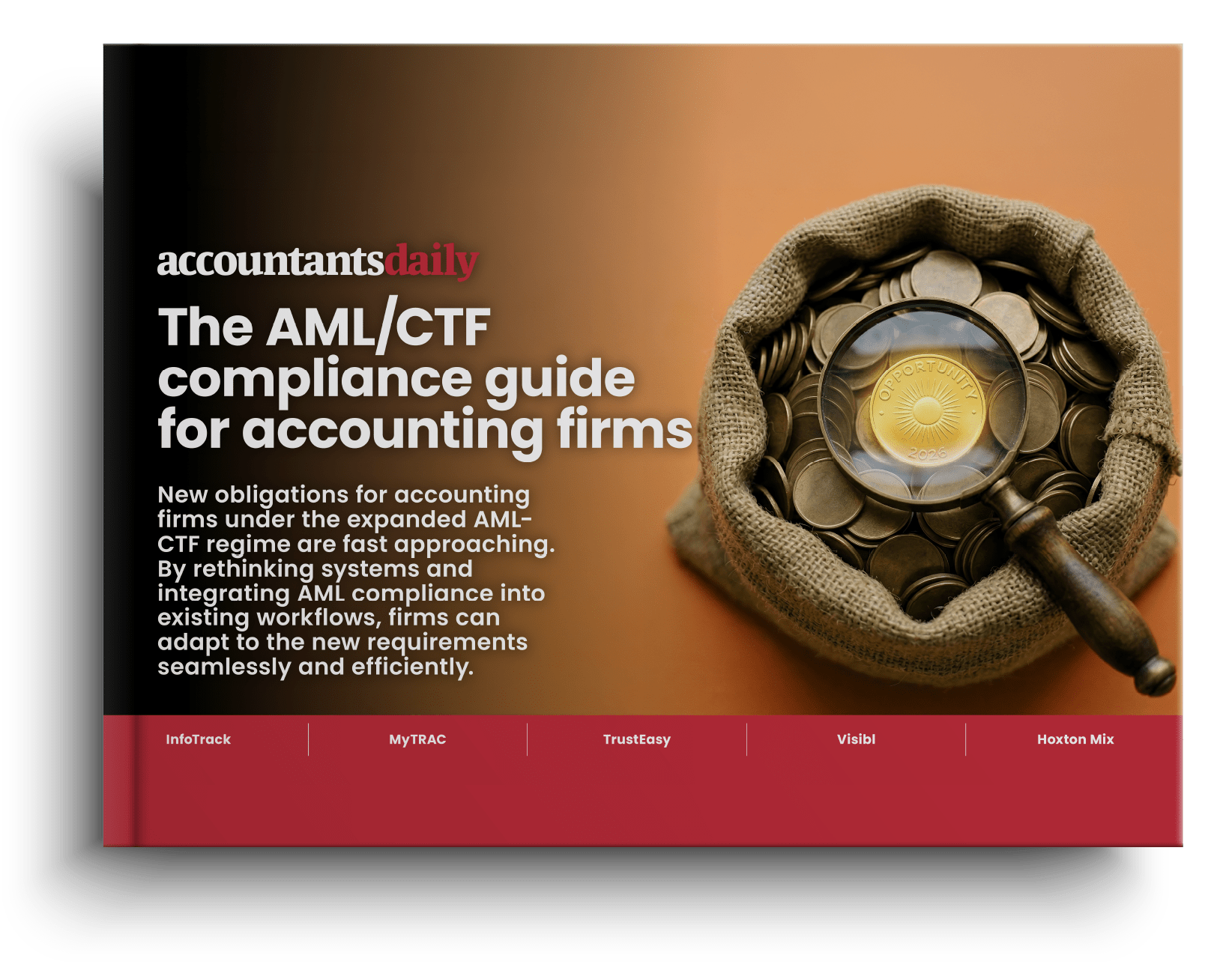


Learn how accounting firms are preparing for the second tranche of AML/CTF reforms with practical guidance on onboarding, verification, compliance systems, automation, registered address obligations, and operational readiness.
Download the guide